Paris Louvre Photoshoot - Session Options and Locations
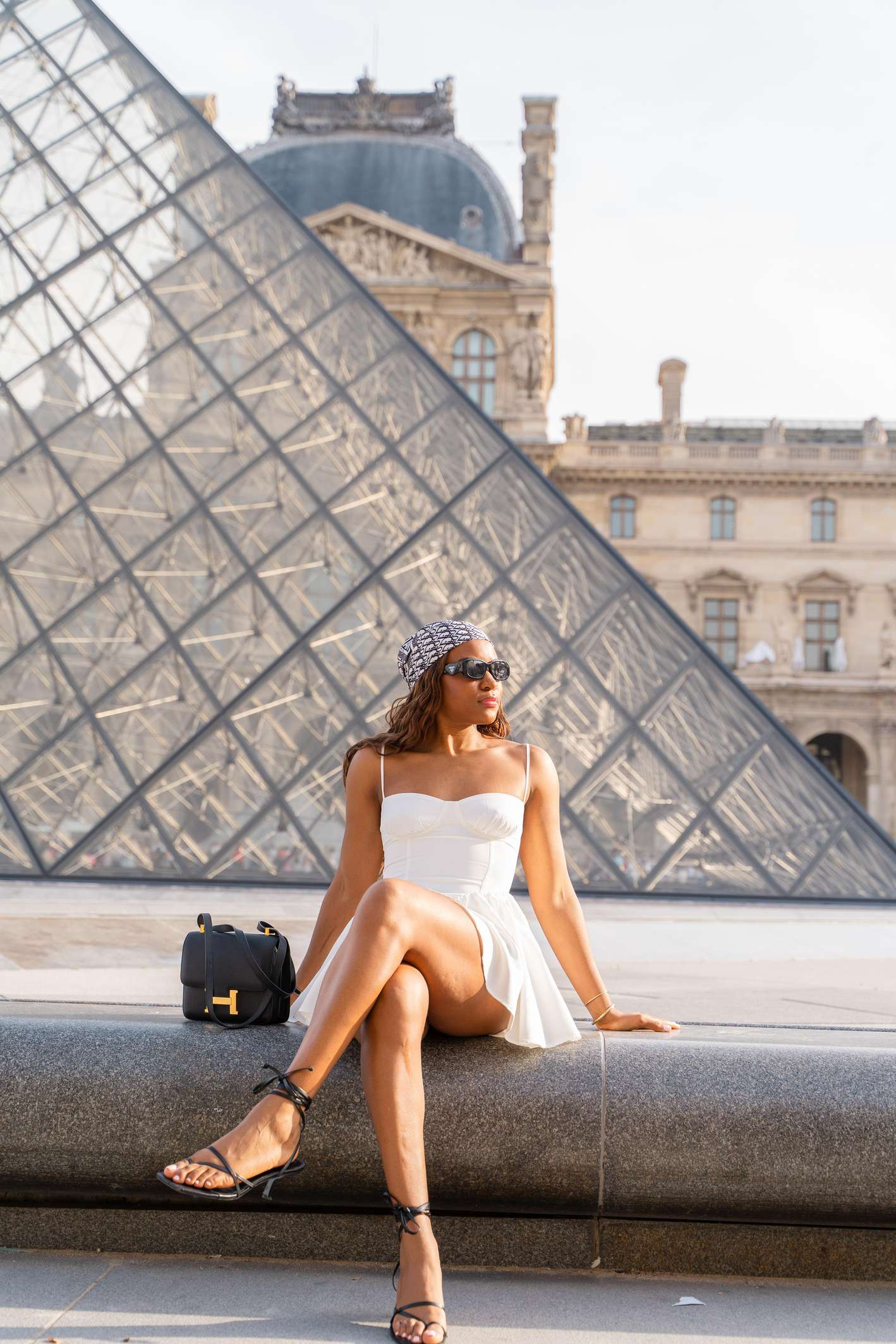
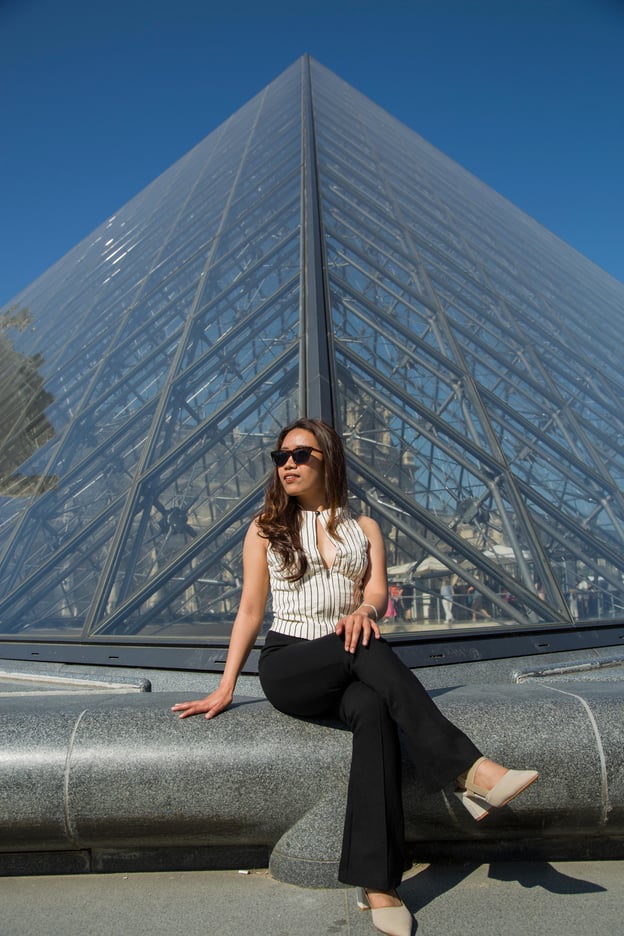
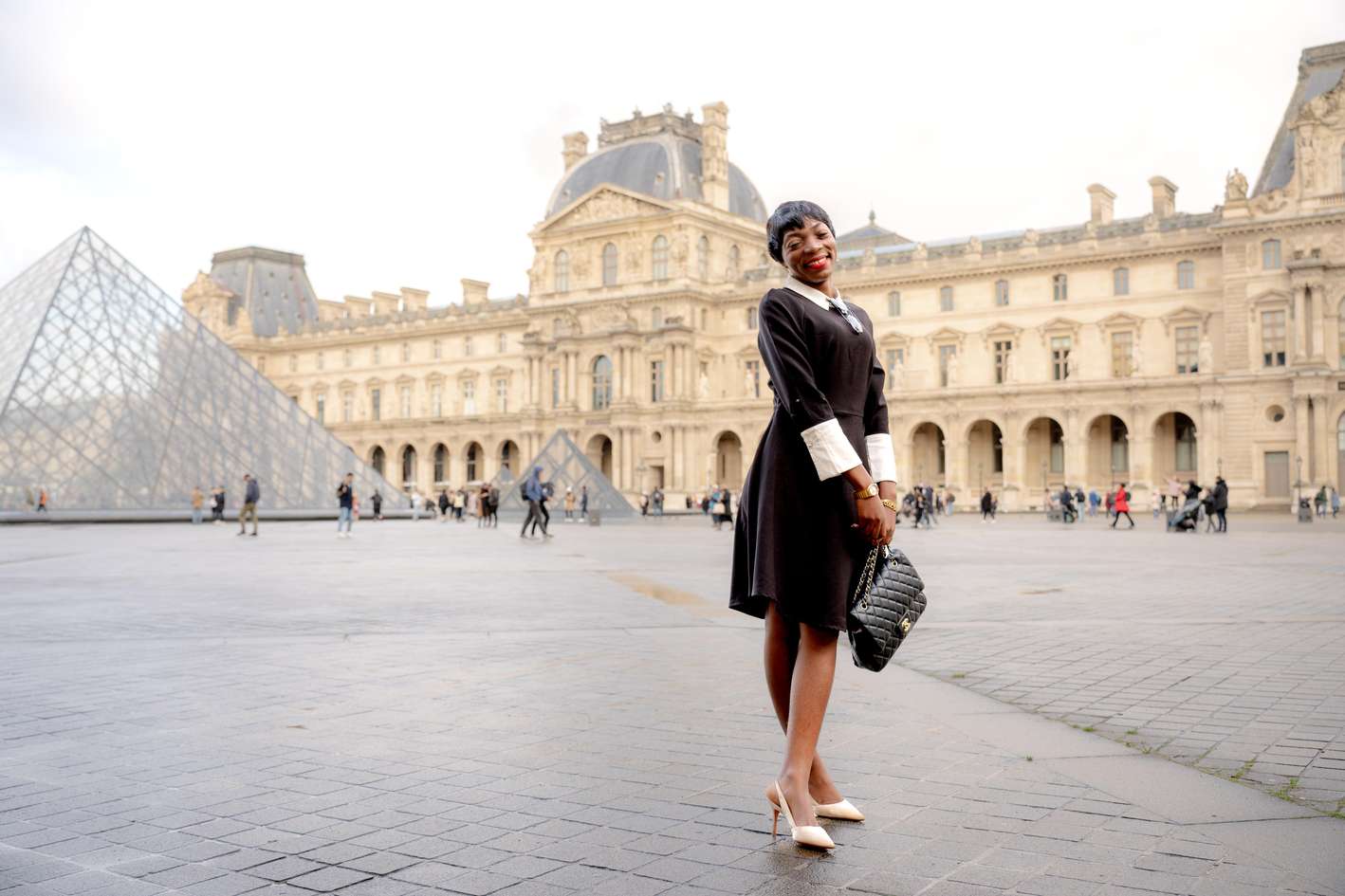
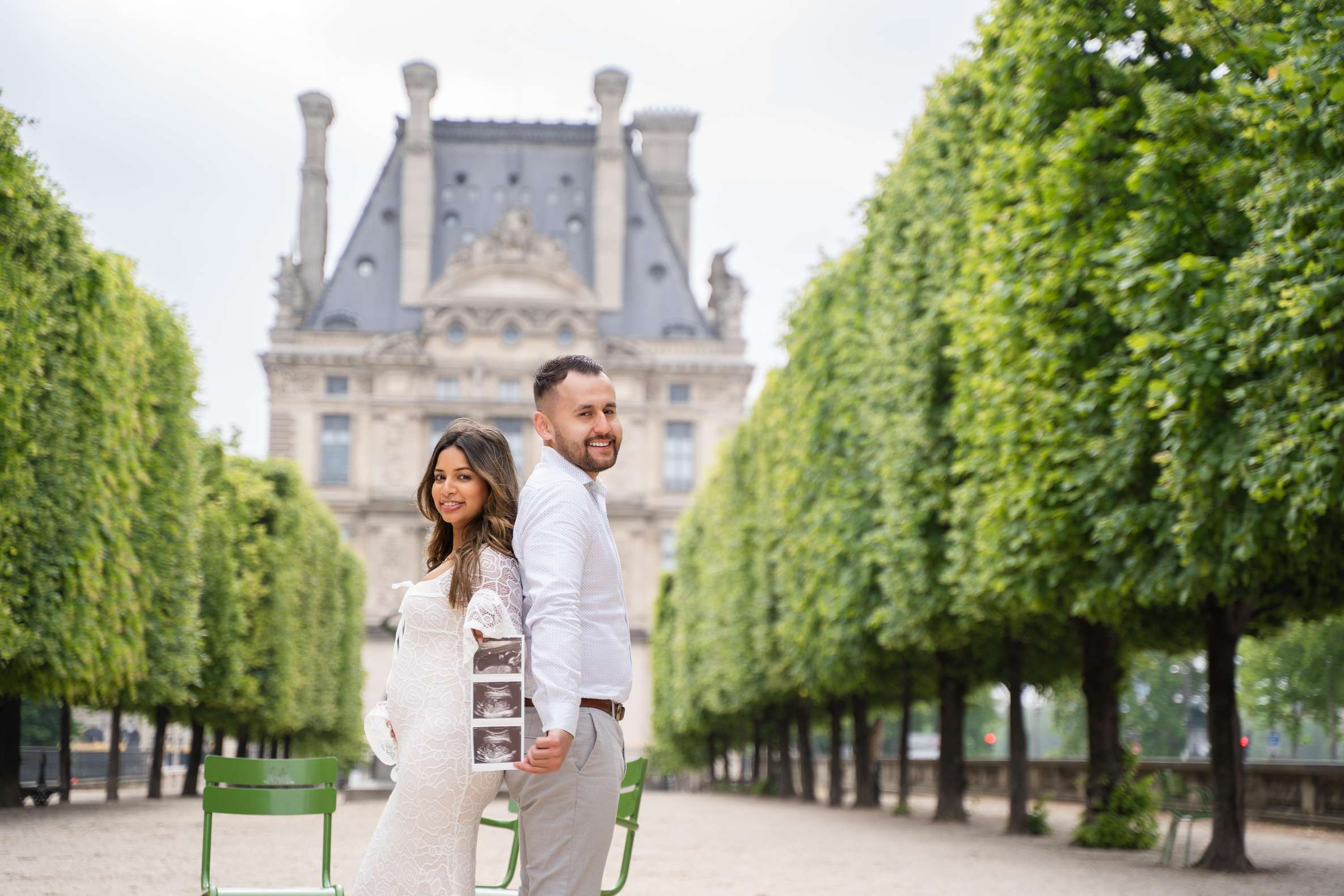
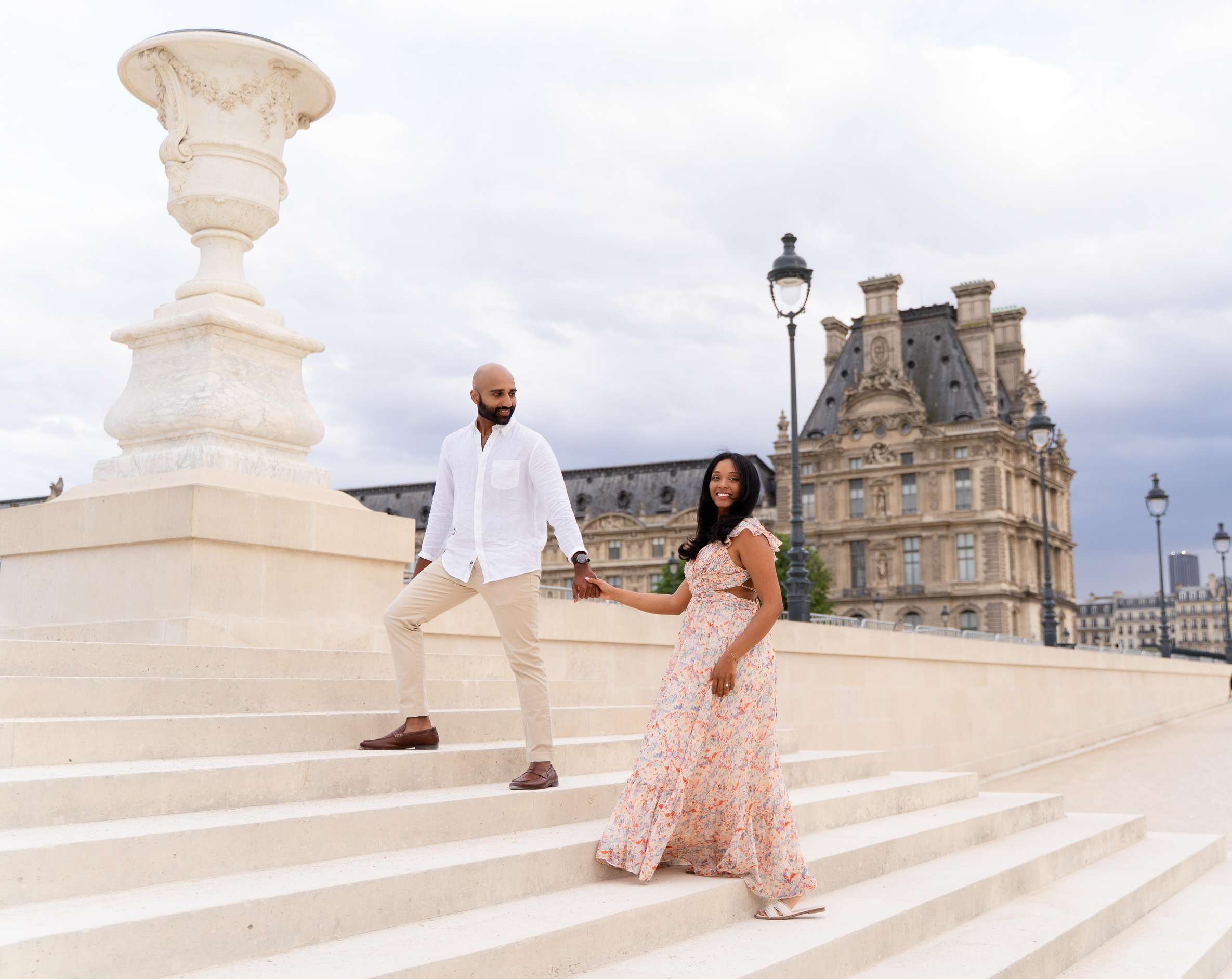
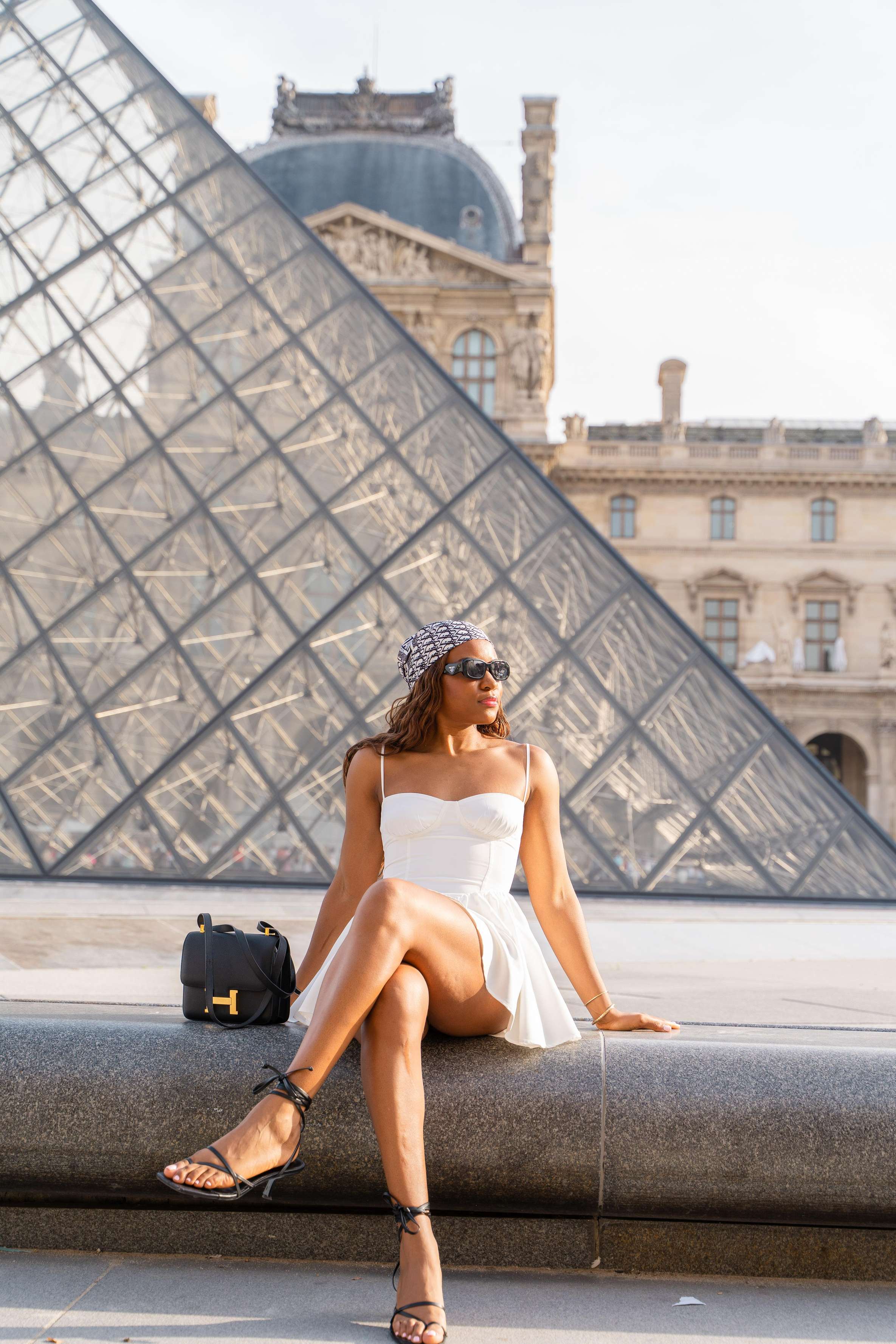
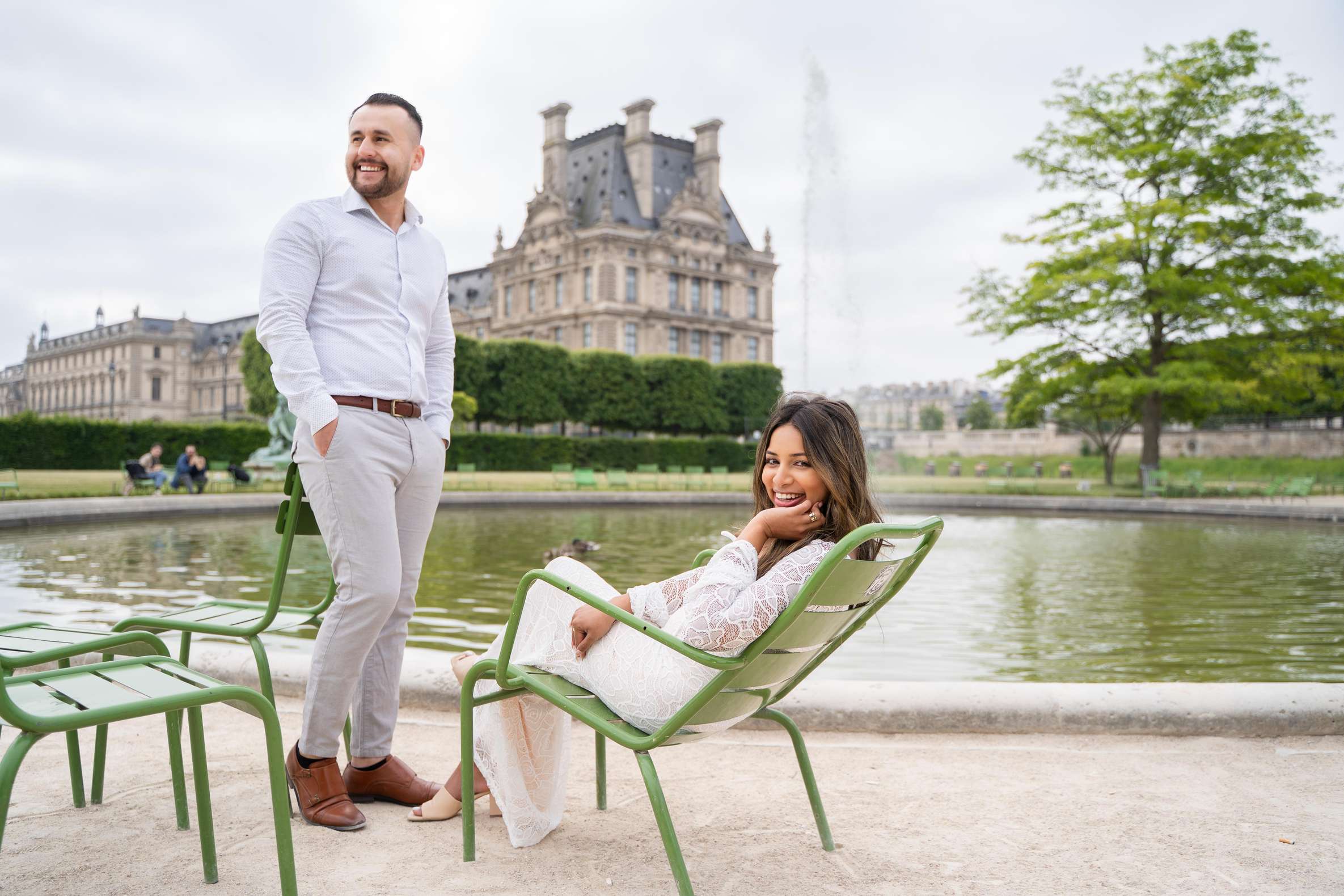
Get polished portraits under the glass pyramid. Book a private Louvre photoshoot with a pro photographer, clear posing help and edited photos delivered fast. Choose a short session outside the museum or pair the Louvre with other landmarks, and go home with photos that say you were really here.
"Carole messaged me on WhatsApp to remind me before the shoot. So professional, and the photos are gorgeous! Perfect for English-speaking tourists. Thank you madame Carole!"
4.9★average rating1,224traveler reviews100%free cancellation60countries travelers came from
Choosing your Louvre Photoshoot in Paris
A Louvre photoshoot comes in two main shapes: a session focused on the pyramid and palace facades, or a longer walk that pairs the Louvre with other Paris landmarks. Short sessions suit travelers on a tight schedule, while the two-hour routes add the Eiffel Tower, the Seine or the Arc de Triomphe to the same set of pictures.
TimingArrive on time, because a session that starts late still ends at its scheduled slot and the photographer may have another booking right after.
TrafficParis traffic can be heavy at any hour, so leave a buffer to reach the meeting point five minutes early.
WeatherRain is possible in Paris year-round, so check the forecast and bring an umbrella; heavy rain can lead to a reschedule.
CancellationSessions can be cancelled up to 24 hours in advance for a full refund.
CrowdsThe Cour Napoléon opens at 7:30 am, and early shoots are the quietest way to get clear frames.
AccessThe pyramid courtyard stays usable even when the museum is closed, though construction can block it.
TicketsShoots take place outside the palace, so no Louvre admission is needed or included.
DeliveryEdited photos usually arrive within 24 to 48 hours through a private online gallery.
CoordinationPhotographers typically confirm the meeting point and plans with you on WhatsApp before the shoot.
FootwearWear comfortable shoes you can walk in, since these sessions move between several spots.
accessConstruction work can block access to the Louvre Pyramid courtyard, and professional photography inside the museum itself needs prior written authorisation from the Louvre.
Plan your session around the courtyard and palace exterior, which stay open even when the museum is closed, and check for construction before you go. Ask your photographer how they handle access on the day, and arrive early since the Cour Napoléon opens at 7:30 am.
Louvre photoshoot options to compare and book
Cheapest Louvre option
15 minutes - 1.5 hours·English, French
4.7(145)
Paris: Private Photoshoot Outside the Louvre Museum
Sessions start at 15 minutes with five edited photos, the lowest entry point of the four, and photos arrive fast.
Free cancellationPhotoshoot (varies depending on package)In English and French
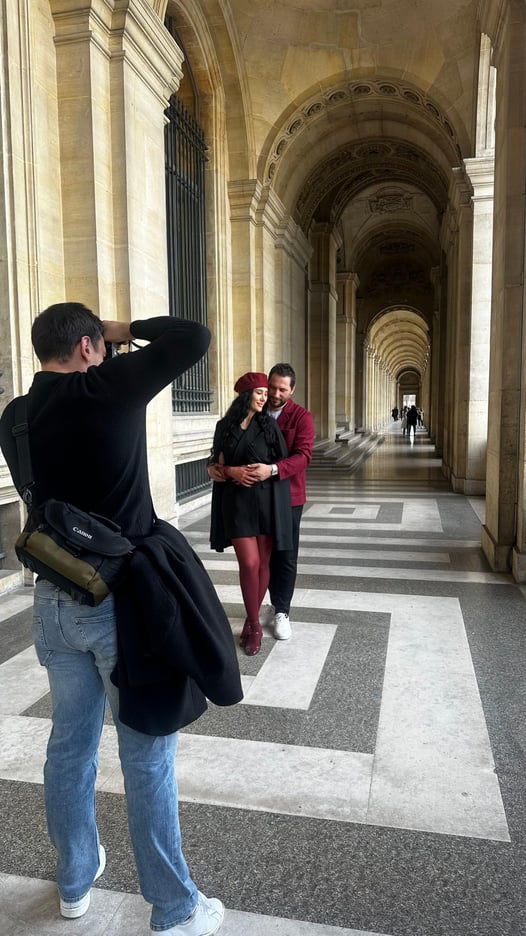
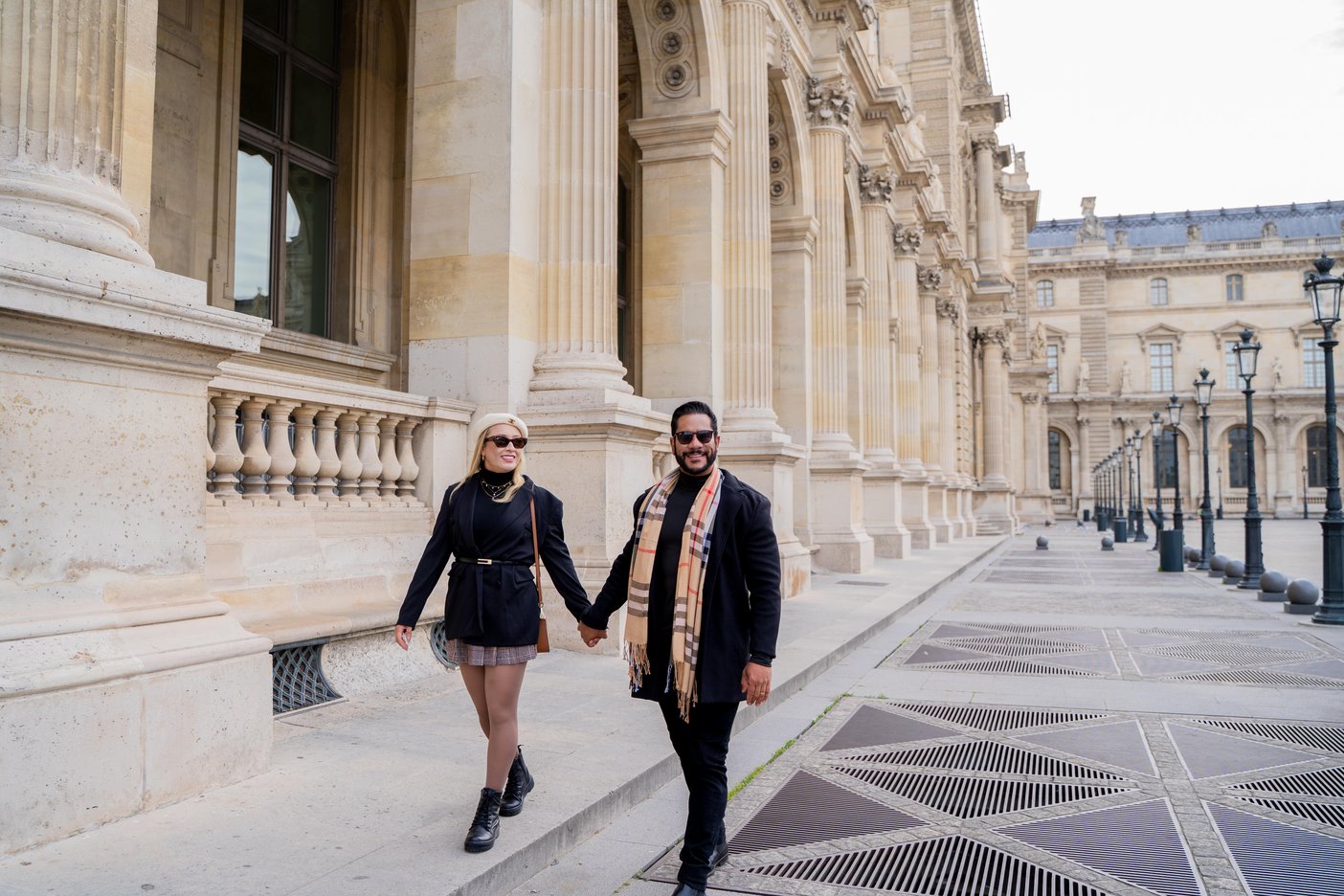
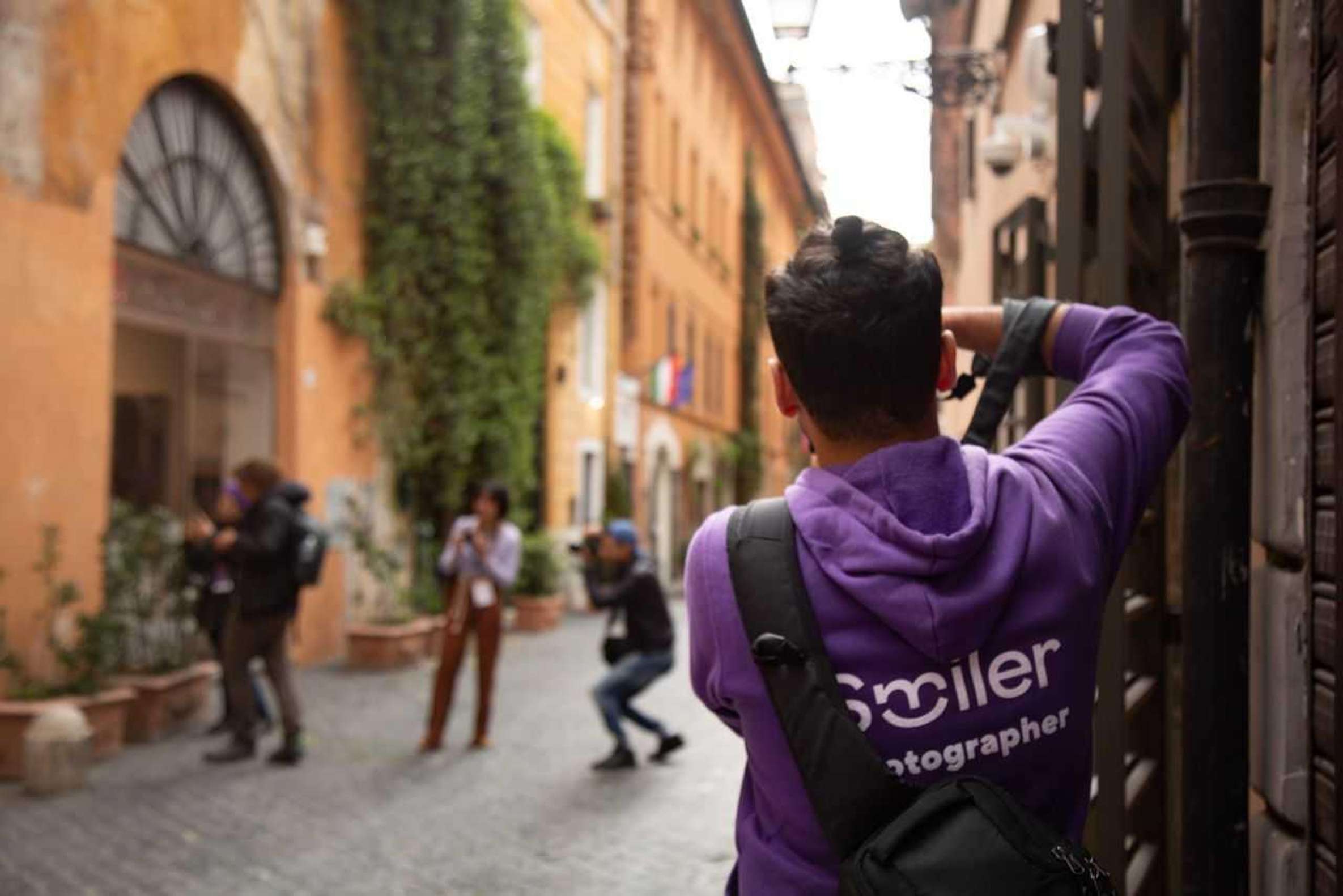
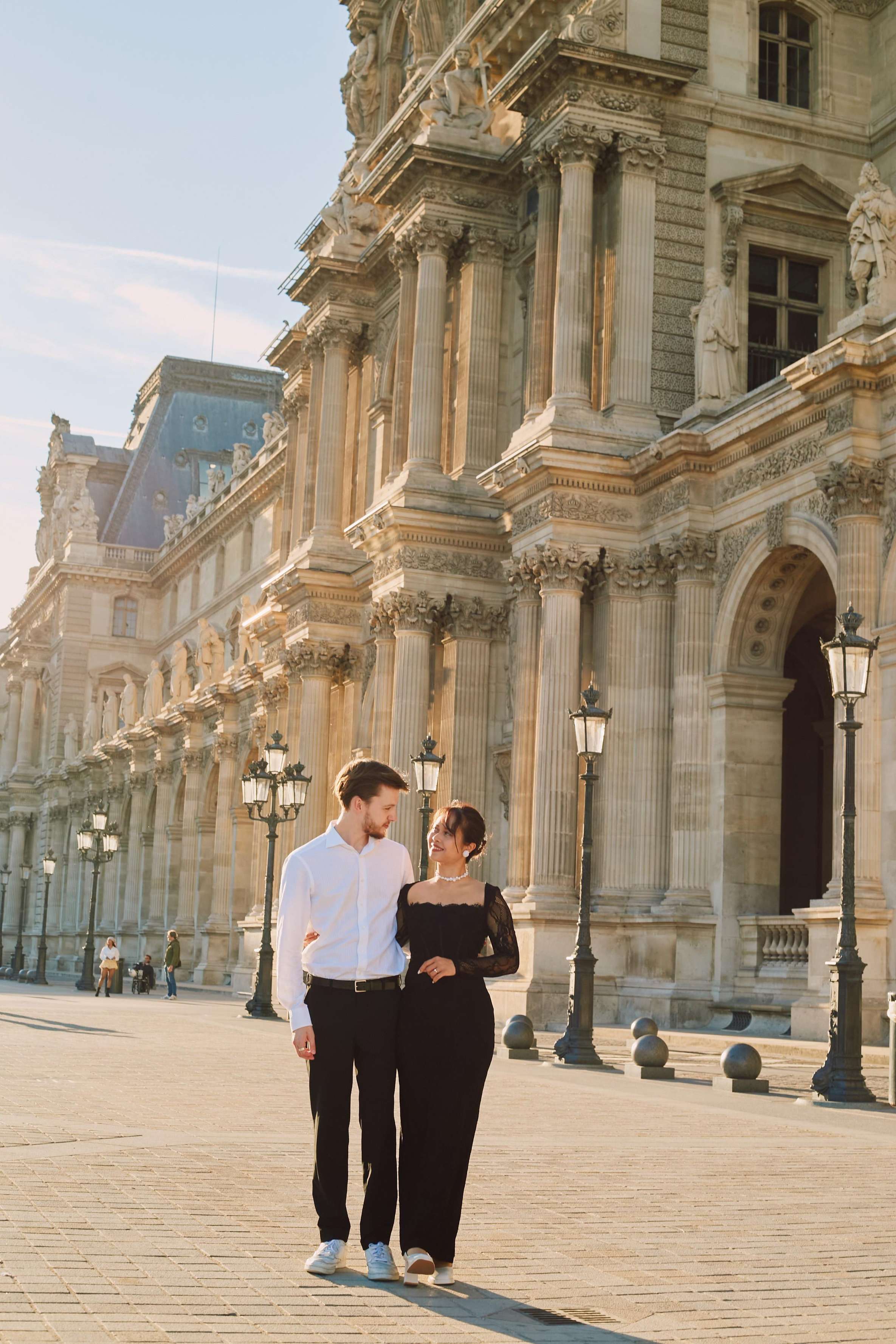
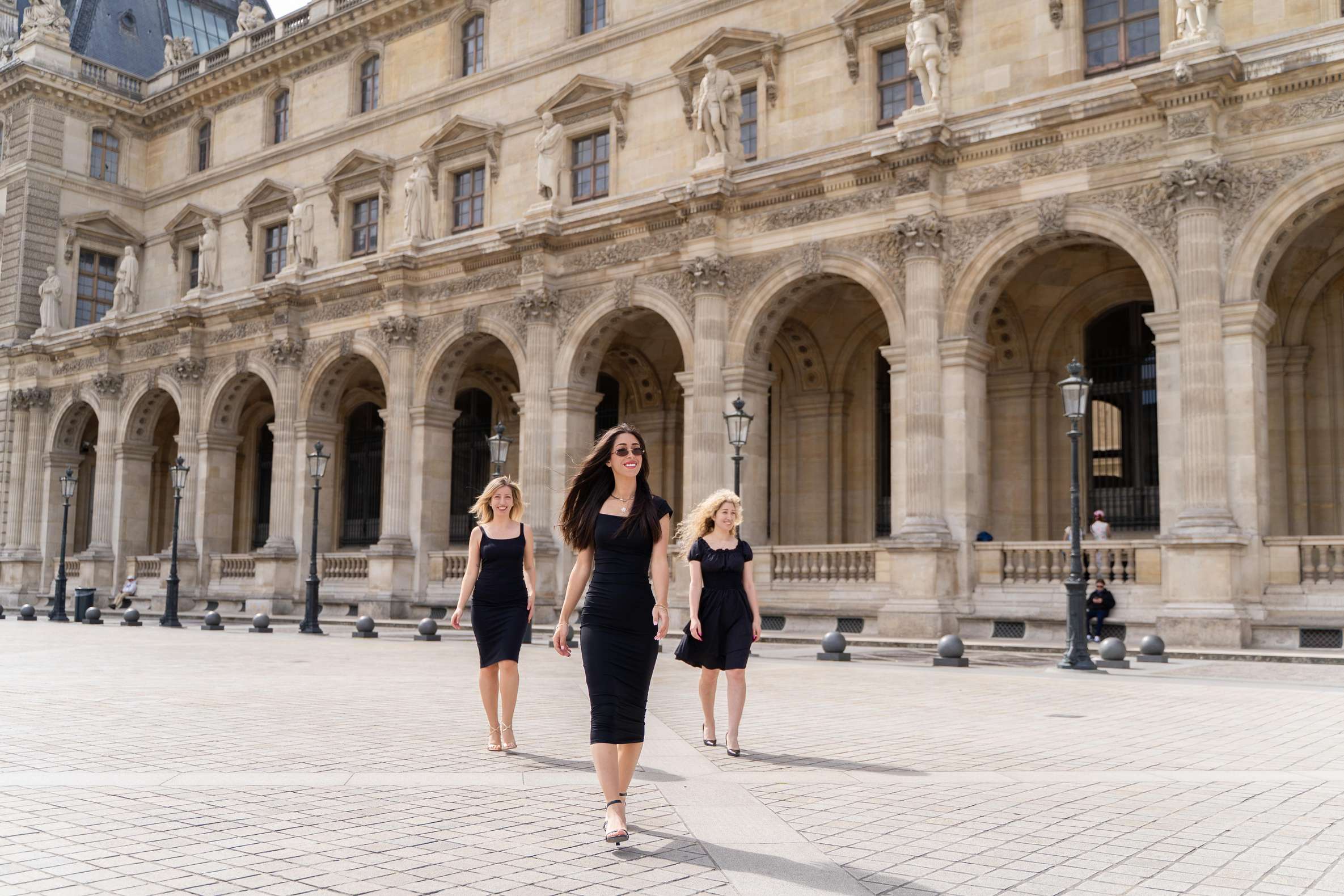
The session starts in the streets around the Louvre, where your photographer picks out the angles that make the setting unmistakable: the glass pyramid in the middle of Cour Napoléon, the palace façades behind it, the arcades along Rue de Rivoli.
You get posing guidance the whole time, so no one has to arrive knowing what to do.
How much you see depends on the package you pick. The shortest runs 15 minutes and covers one spot; the longer sessions move between several backdrops, and the fullest option takes an hour and a half.
Every package brings edited, high-resolution pictures afterwards, and photographers usually send a gallery link within a day or two of the shoot.
Meeting pointLouis XIV sous les traits de Marcus Curtius - copieYour meeting point, a copy of the equestrian Louis XIV statue near the Louvre. Meet your photographer here, confirm the plan, and start with the first backdrop nearby.Street View2Louvre Museum· 45 minPosed portraits outside the museum, in the pyramid courtyard and around the palace façades. The outdoor shots need no entry ticket, and the courtyard stays usable even when the galleries are closed.
Where the other tours go
Pont Alexandre IIILouis XIV sous les traits de Marcus Curtius (copie)Louvre Museum
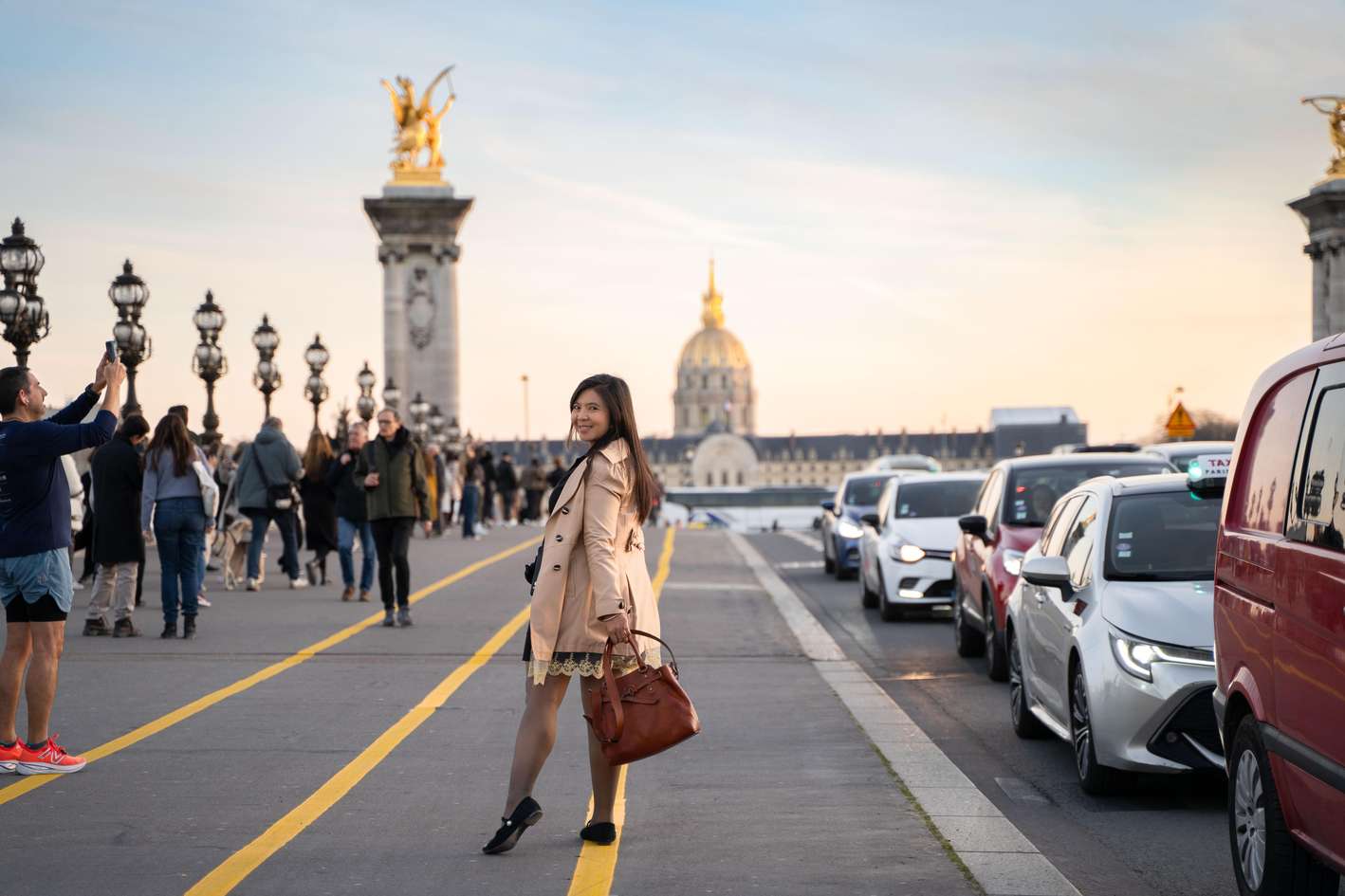
Paris: Louvre photoshoot or Seine bridges Eiffel Tower walk
Pont Alexandre III
Louis XIV sous les traits de Marcus Curtius (copie)
Most reviewers found their photographer put them at ease, with clear posing help from the first shot.
Best surprise
Several families loved the quiet secret spots their photographers knew around the busy pyramid.
Most common wish
Many wished the session ran longer, saying the thirty minutes flew by like a full hour.
How to book a Paris Louvre Photoshoot
01
Pick your date and session length
Choose a date first, then decide how long you want the camera on you. Sessions outside the Louvre run from 15 minutes to 90, and longer bookings cover more of the palace facades and courtyard.
Pro tipThe Cour Napoléon opens at 7:30 am, and an early slot gives you the softest light and the fewest people in the background
RecommendedMornings stay calm until midday, while the 11 am to 3 pm stretch brings the hardest light and the biggest crowds
02
Choose the option that fits
Compare the packages by minutes and photo count. A 15-minute express gives you a handful of edited shots, while a 90-minute session delivers 80 and room for several spots around the museum.
Pro tipDecide who is in the shoot before you book, since some short sessions suit one or two people better than a family group
03
Book and pay online
Pay through the booking platform by card rather than cash on the day, so you have a record of the deal. Look for the free cancellation window, which on these Louvre sessions runs until 24 hours before the shoot.
ImportantA registered French photographer gives you a company name or identification number without hesitation, so ask if anything feels unclear
04
Watch for the confirmation
After payment you get your date and time confirmed, and the photographer usually reaches out on WhatsApp to settle the meeting point and plans. Reply with your questions there, and keep the app installed before you travel.
Common mistakeAssuming the meeting spot is inside the museum. These shoots happen outside, at the pyramid courtyard, and no entrance ticket is needed or included
05
Show up early on the day
Arrive with time to spare at the agreed spot near the Louvre. The session still ends at the scheduled time if you are late, because the photographer often has another booking straight after yours.
RecommendedWear shoes you can walk in around the courtyard and bring a light rain layer, since Paris averages plenty of wet days each month
What to know before you book a Louvre photoshoot
Can stop the dayGood to knowGood news
01
ChoosingWhat it is, who it suits, when to go
4
PermitsCan stop the day
Professional photography inside the Louvre's grounds requires prior written authorisation from the museum itself, and Paris Film does not handle requests for the site. The bookable sessions therefore shoot from the public courtyard and surrounding streets, which anyone can use.
Extras to budget
Some things sit outside the package. Louvre entrance tickets, transport between stops and unedited raw files are the usual exclusions, and extra photos beyond your included set cost more. Decide before the shoot how many images you actually want to keep.
Timing
The Cour Napoléon opens at 7:30 am, so a true sunrise shoot is not always possible. Midday from about 11 am to 3 pm brings the hardest light and the biggest crowds. Sunset warms the pyramid nicely, and the courtyard calms down just after.
Crowds
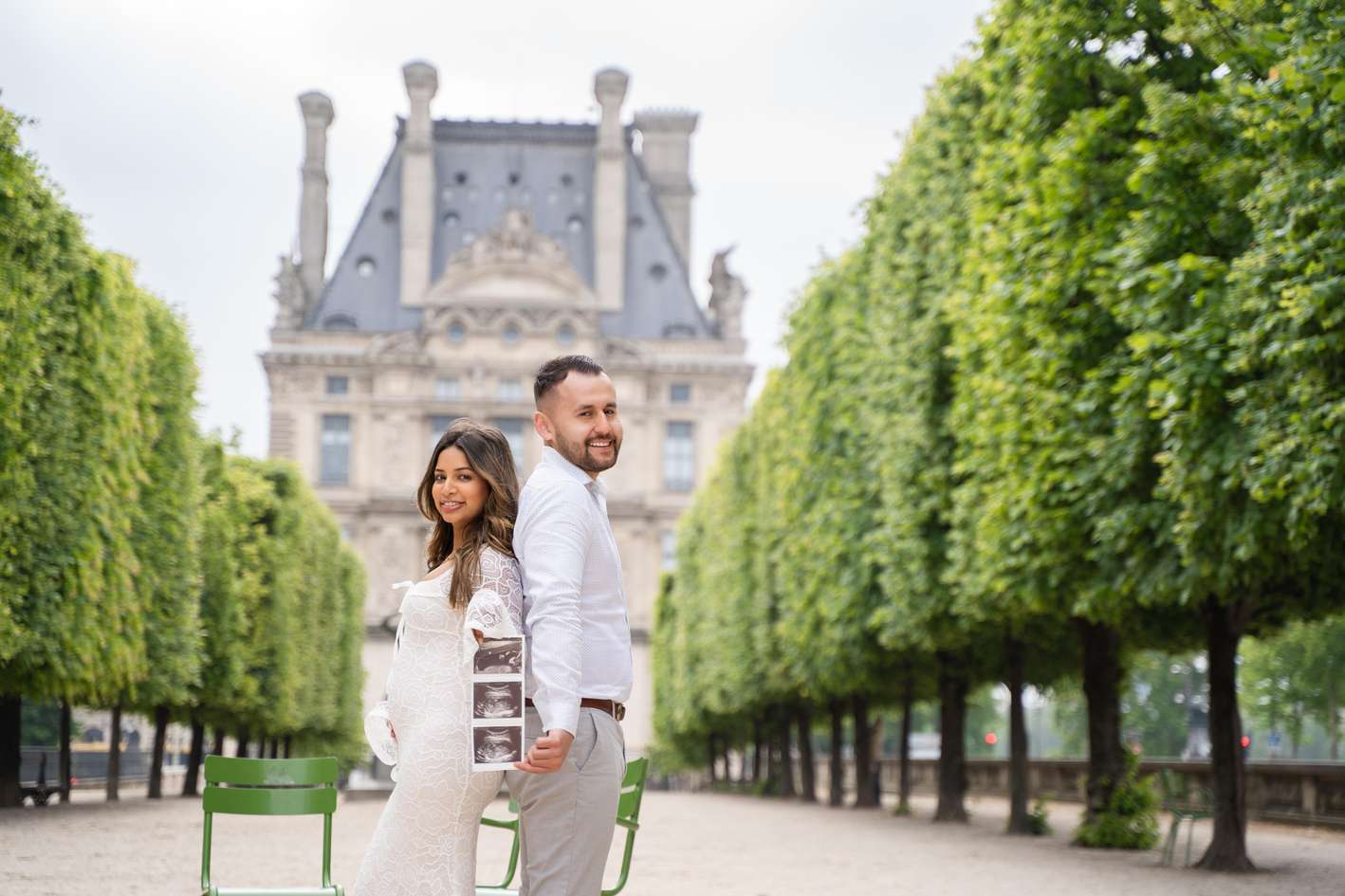
Early sessions are the calm ones. Visitors report that a morning shoot means fewer people in the background, and photographers know quieter corners such as the Tuileries or spots a little away from the main flow. The courtyard can still be busy even when the museum is closed.
02
BookingHow far ahead, and what happens if plans change
1
Cancellation
All the Louvre sessions on this page let you cancel up to 24 hours in advance for a full refund. That gives you room to move the date if the forecast turns or your plans shift.
03
Before you goPapers, health, what to bring
1
What to wear
Dress for the season, since average highs run from about 7-10°C in winter to 24-25°C in summer. Wear layers and comfortable shoes with grip, and carry a light rain layer: Paris averages roughly 9 to 13 wet days a month. Rain rarely spoils the photos, and photographers adapt.
04
On the dayWhere to be, when, and how you get there
1
Late arrivalCan stop the day
Arrive on time. One tour operator ends the session at the scheduled time even if you are late, because another booking follows, and another says it cannot extend or reschedule a late arrival. Paris traffic can be slow, so leave a buffer.
05
During the tourWhat is expected of you
3
Meeting point
These sessions meet on foot near the museum, so there is no pickup. Palais-Royal / Musée du Louvre on Metro lines 1 or 7 puts you closest to the outdoor photo spots, and Pyramides on line 14 works too. Photographers usually confirm the exact meeting place by WhatsApp beforehand.
No ticket needed
Every Louvre session here takes place outside, so you never need museum admission. The Cour Napoléon and the pyramid's exterior are free to see, and the palace facades along Rue de Rivoli and the Pont des Arts view over the Seine are public too.
What's included
A typical package covers the photographer's time, posing guidance and a set number of edited, high-resolution photos. Tour operators differ on how many images you get and who picks them, so compare the options: one 30-minute Louvre session includes 25 photos, another starts at 5.
A Louvre photoshoot from courtyard to booking
The glass pyramid photographs beautifully and costs nothing to stand in front of. What you pay for is the photographer who makes you look good in front of it, and choosing that session well.
Paris· 48.86° N, 2.33° E
If you only remember three things
1
Shoot early: the Cour Napoléon opens at 7:30 am and sunrise light is the quietest.
2
Cancel up to 24 hours ahead for a full refund on your session.
3
Ask any photographer for their company number; a registered one gives it straight away.
Is a Louvre photoshoot worth it without museum tickets
The question sits there from the start: why pay for a session somewhere you could simply walk to? Because the courtyard itself is free.
The Cour Napoléon and the pyramid exterior cost nothing to photograph, and the galleries behind them are the only part that needs admission. A Louvre photoshoot pays for the photographer; the access comes free either way.
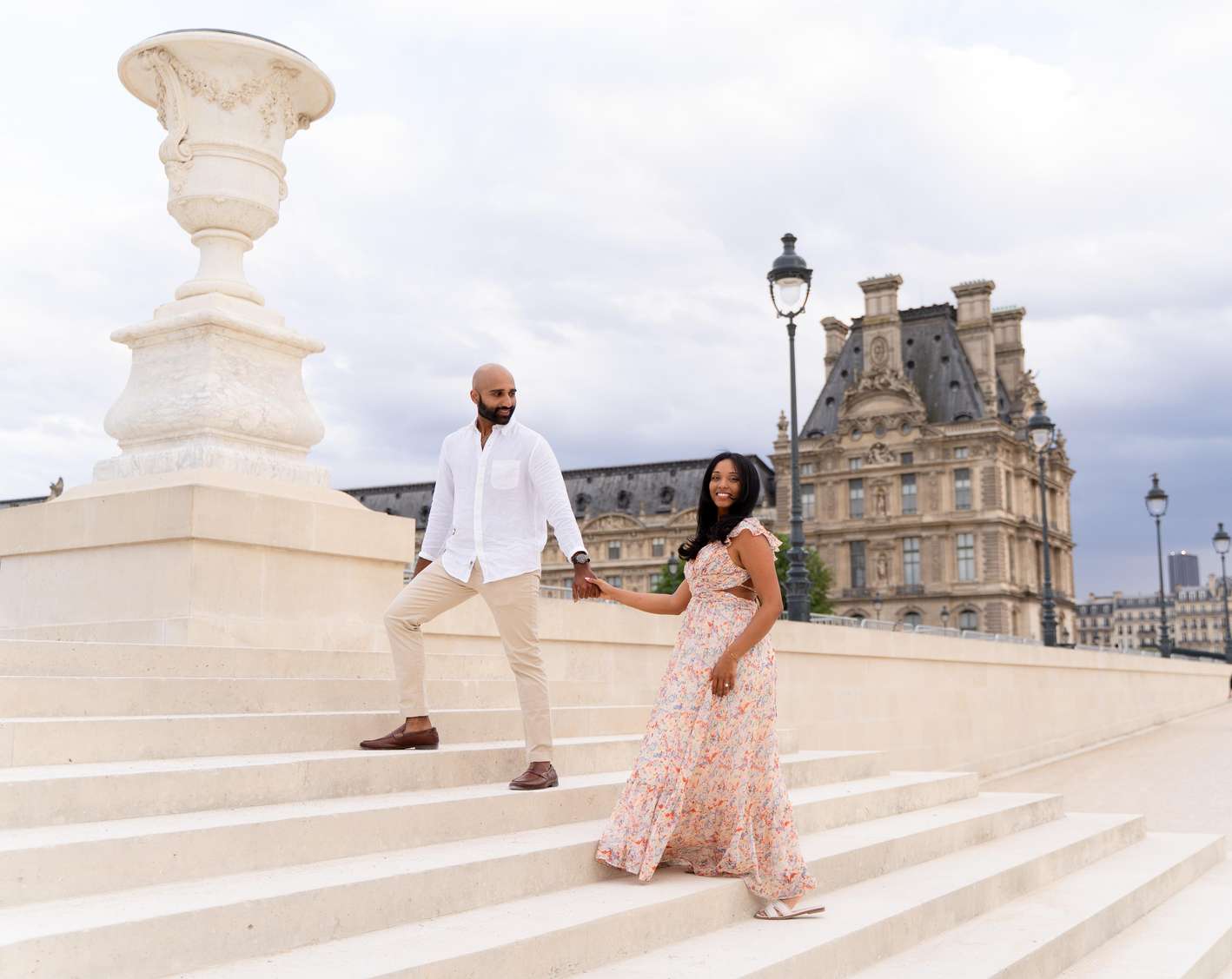
What a professional adds shows up in the frames. The palace façade mixes Romanesque, Renaissance and modern lines, and knowing where to stand turns that stone into a backdrop.
Add the Rivoli arcade as a leading line, Pont des Arts with the Seine below, or the fountains and hedges of the Tuileries, and one session covers more than a day of self-portrait attempts.
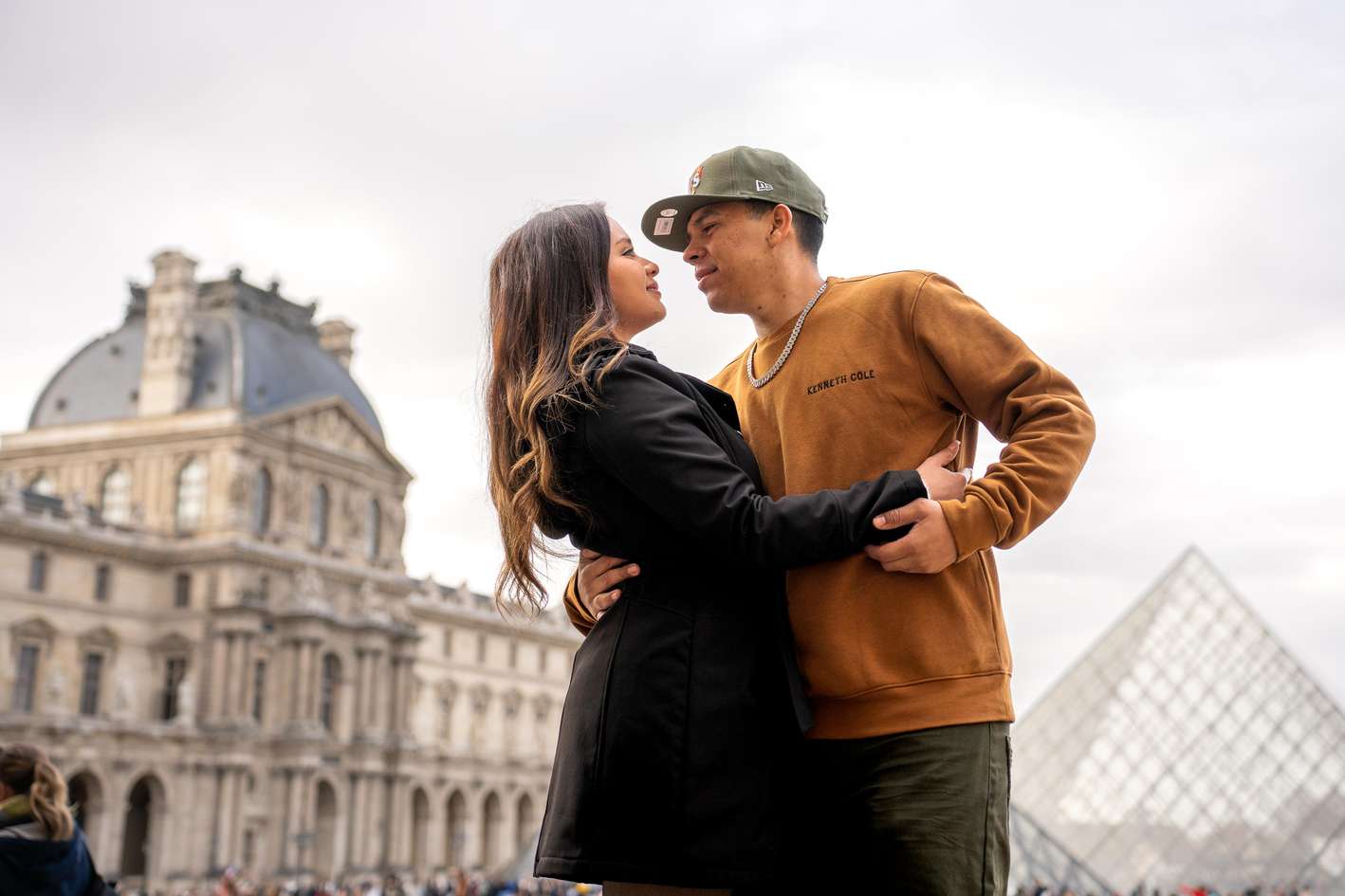
Timing has its own trick. Travelers shoot couple portraits outside the Louvre on Tuesday evenings, in the areas that stay open when the museum is shut, and report it works fine.
What first-timers don't know
The Cour Napoléon can be photographed when the museum is closed
Tuesday evenings and closed days still give you the pyramid, in the areas not fenced off
No Louvre ticket is needed for exterior shots
The courtyard and pyramid are free; only the galleries require admission
Other people will have the same photo idea
The session's value lies in the photographer's eye, since the square belongs to everyone
So the money question answers itself. You are buying the eye and the direction that make a public square look like it was closed for you.
Tour for this
Paris: Louvre photoshoot or Seine bridges Eiffel Tower walk5.0★ (66) · 15 minutes - 1 hour · Free cancellation
What the pyramid and palace give a Louvre photoshoot
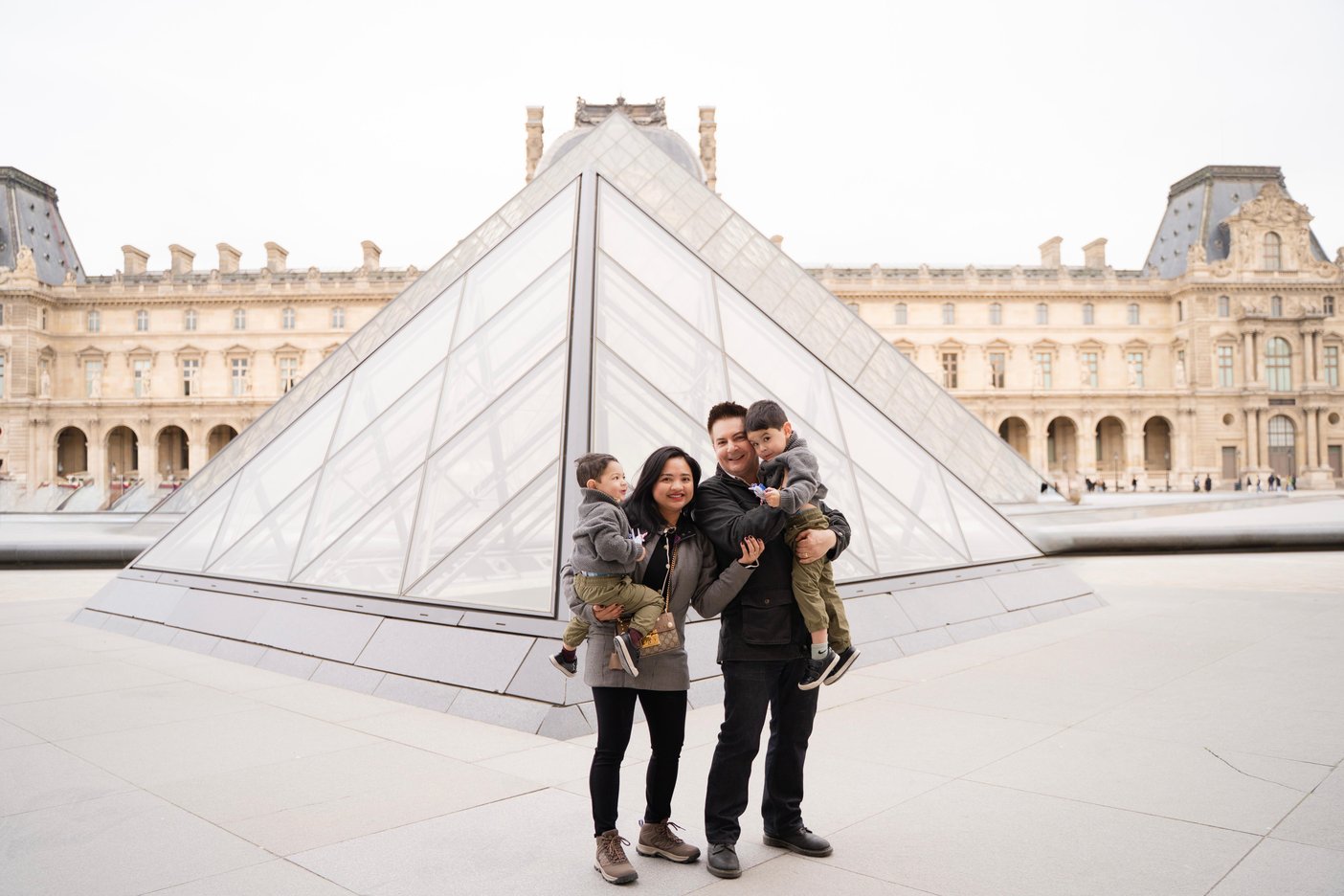
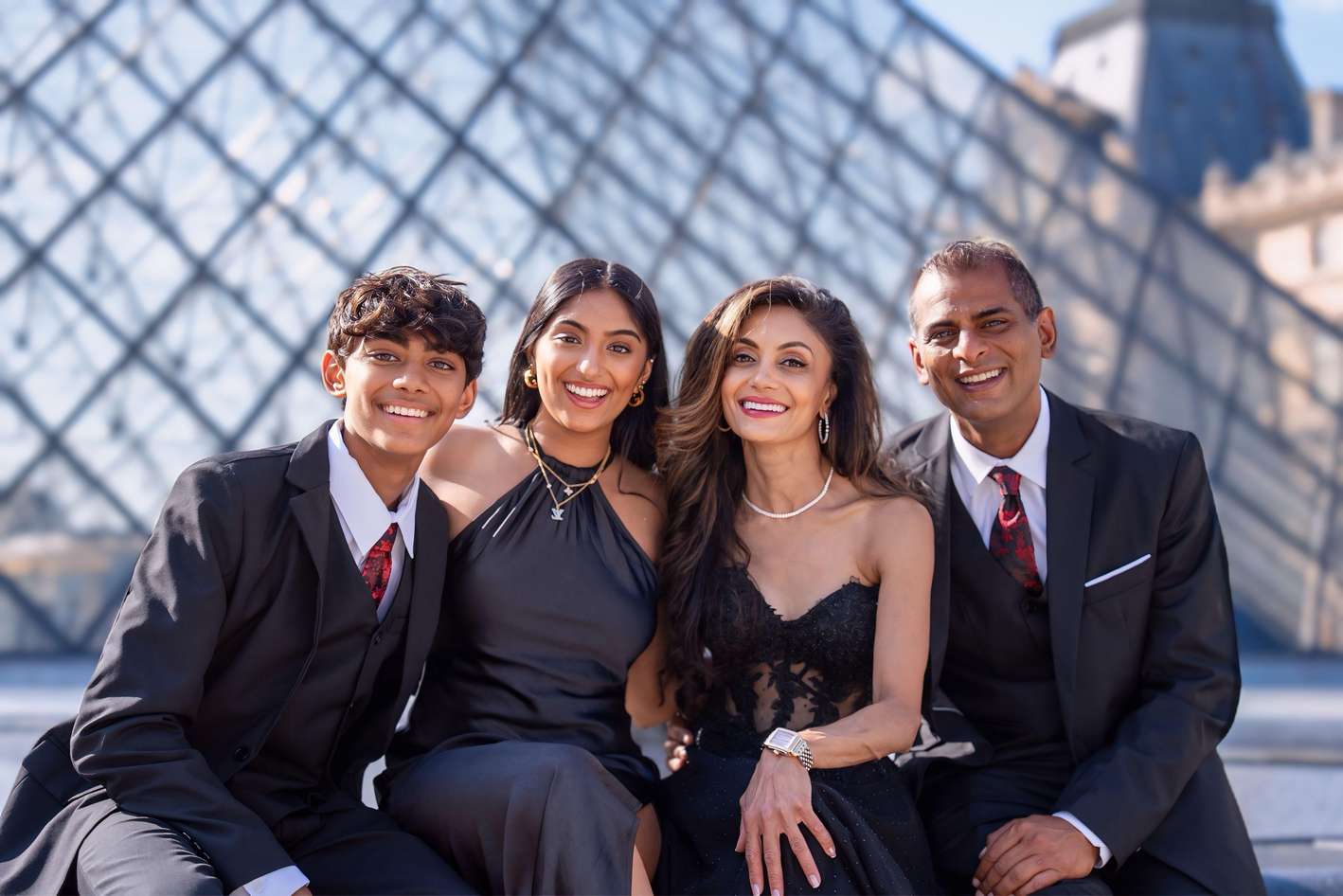
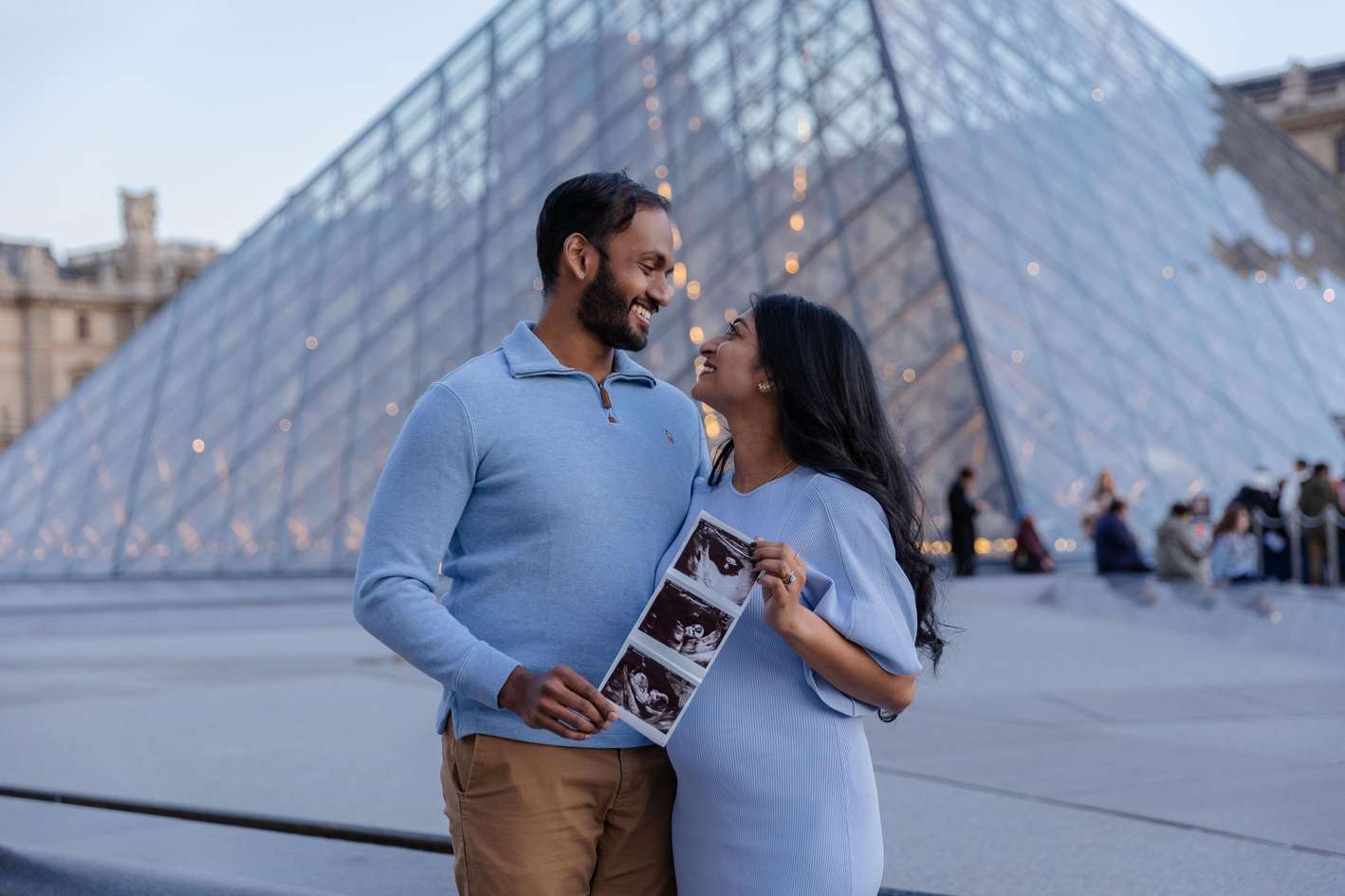
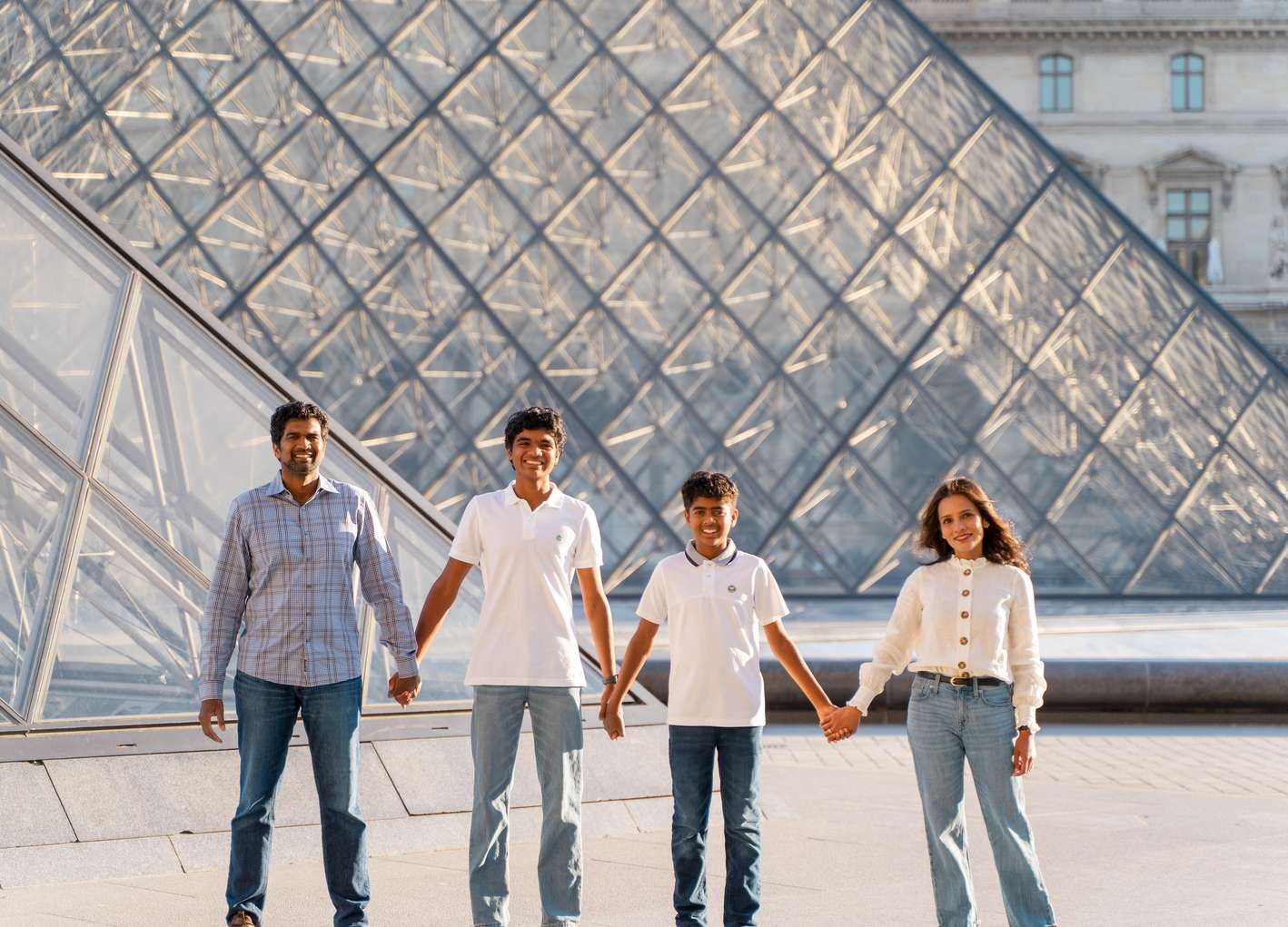
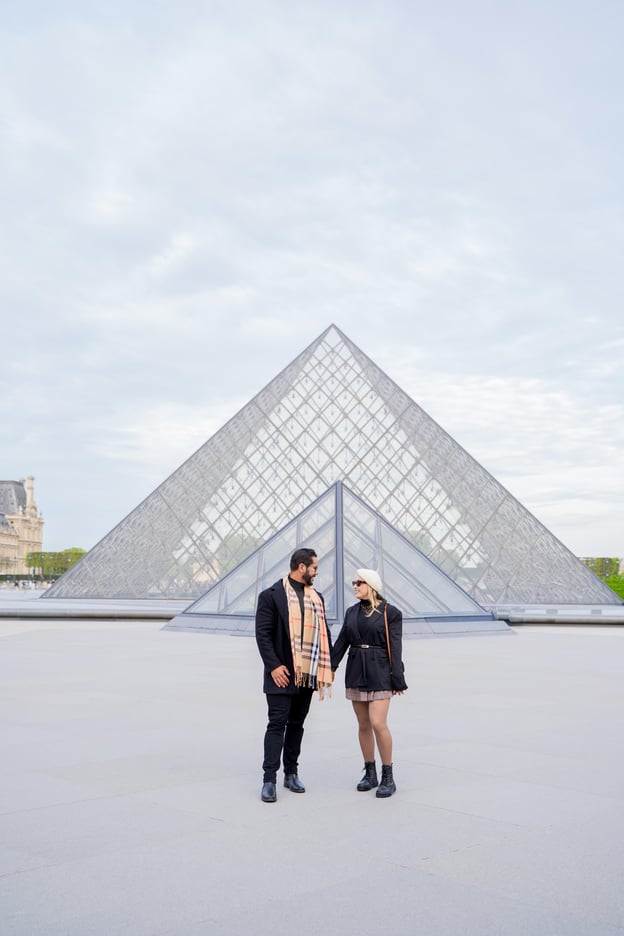
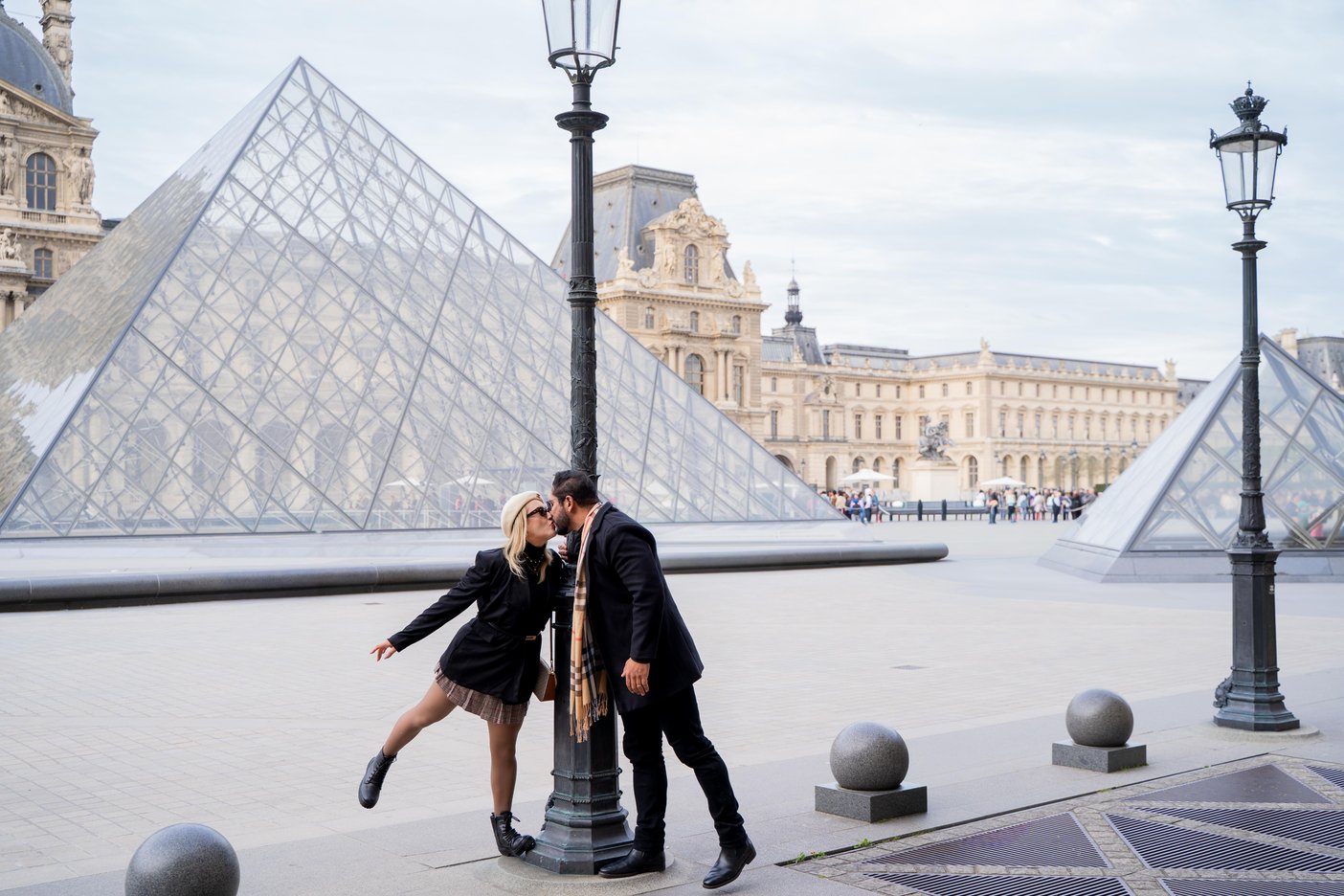
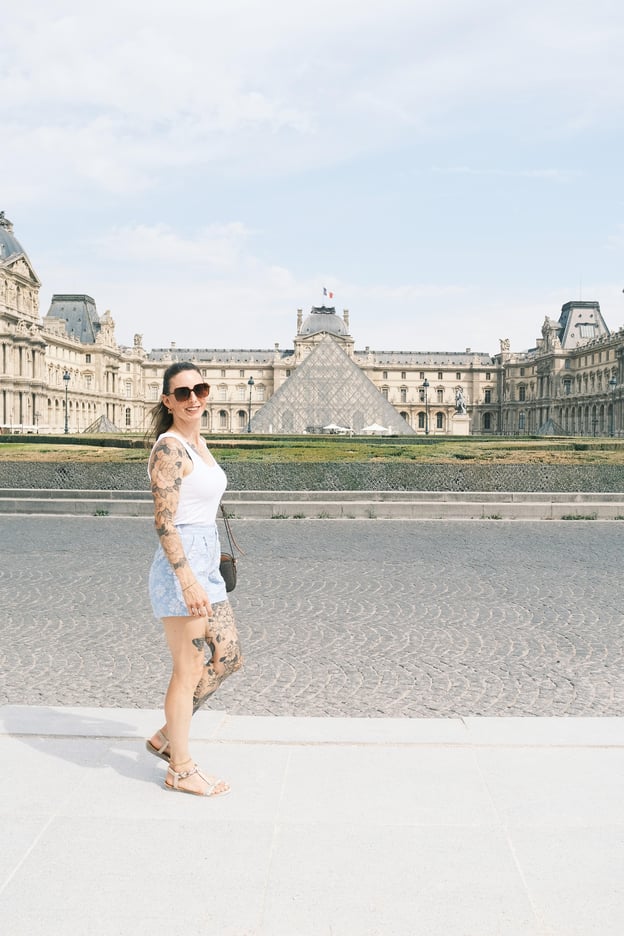
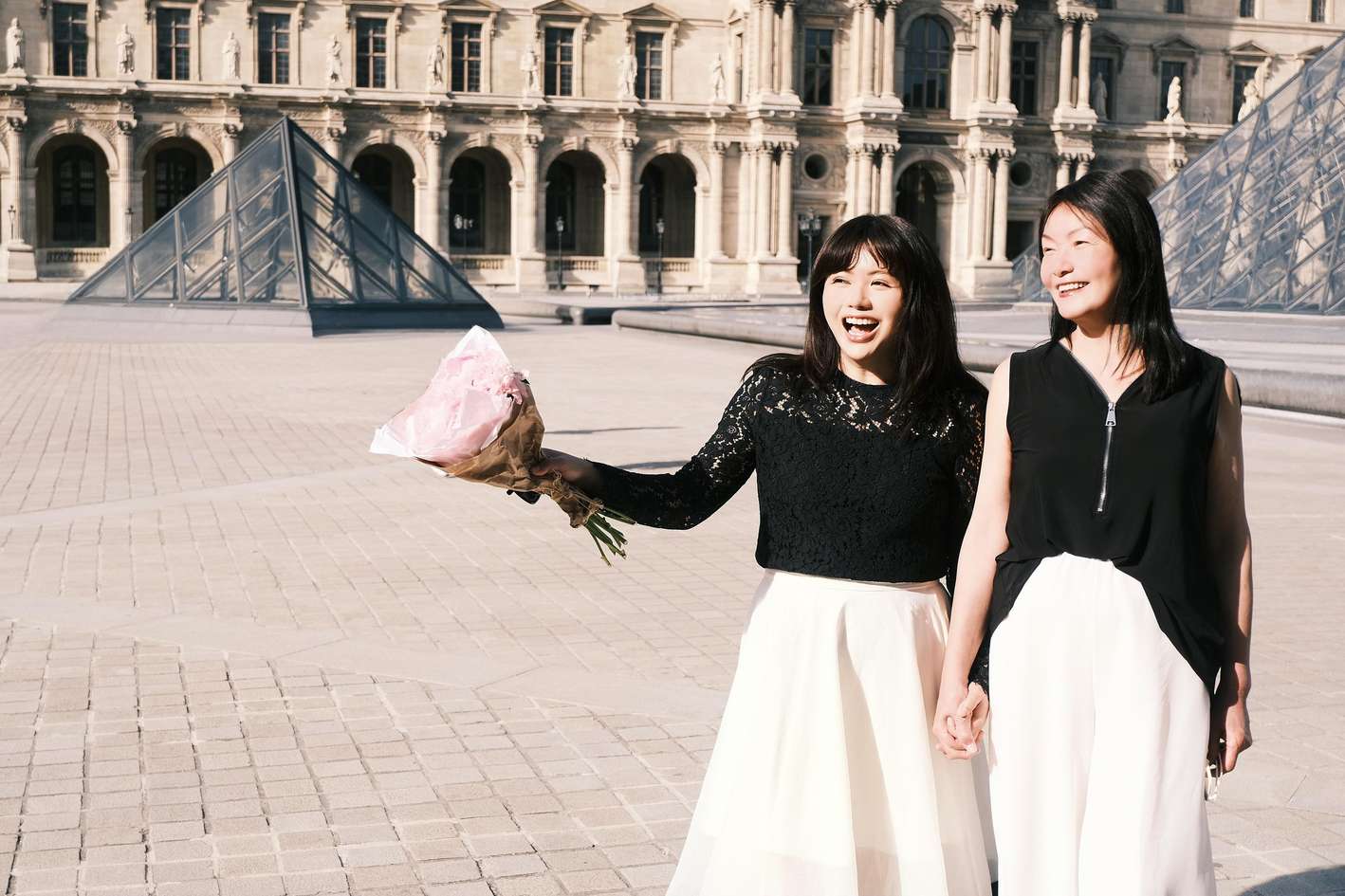
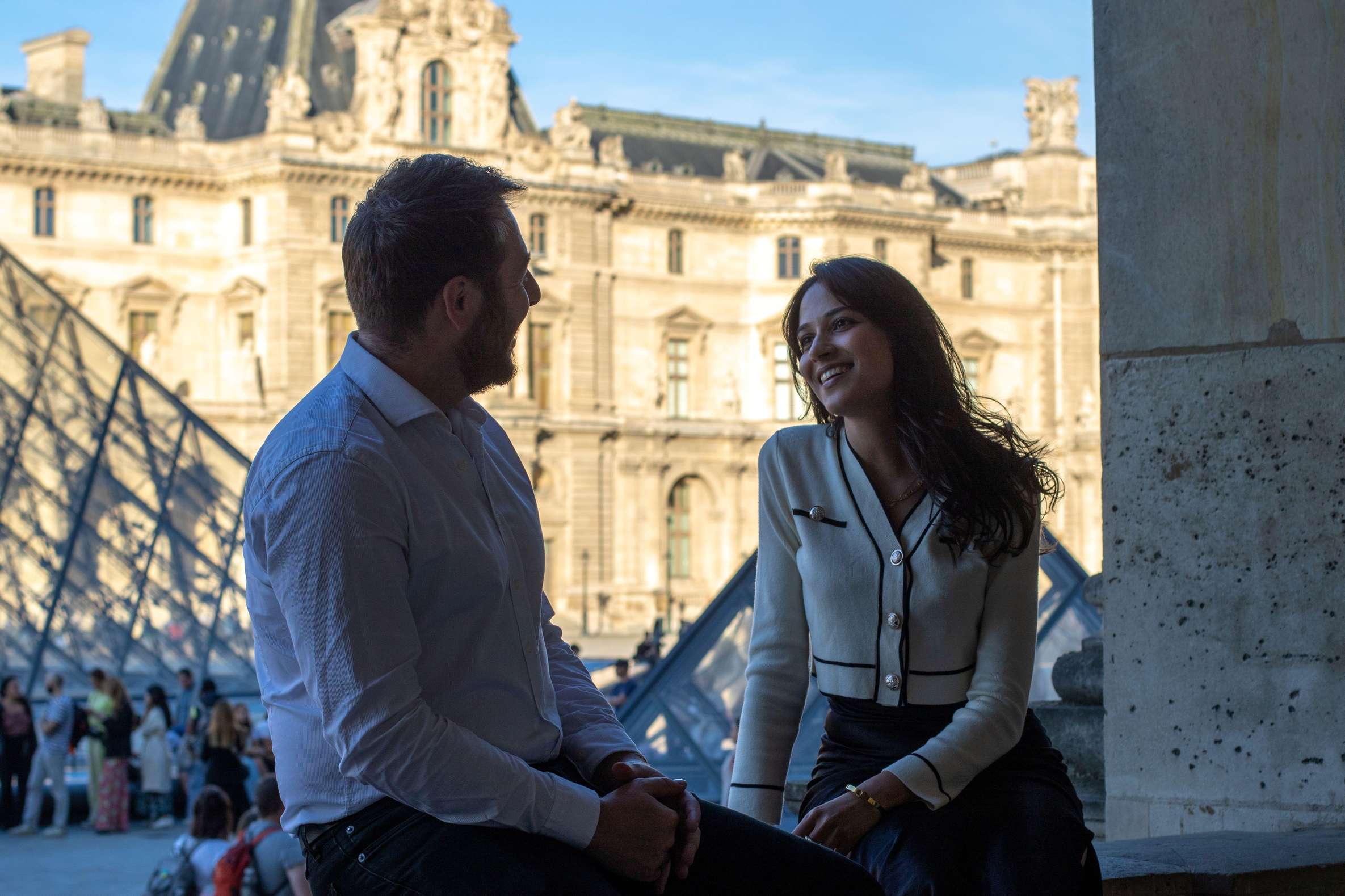
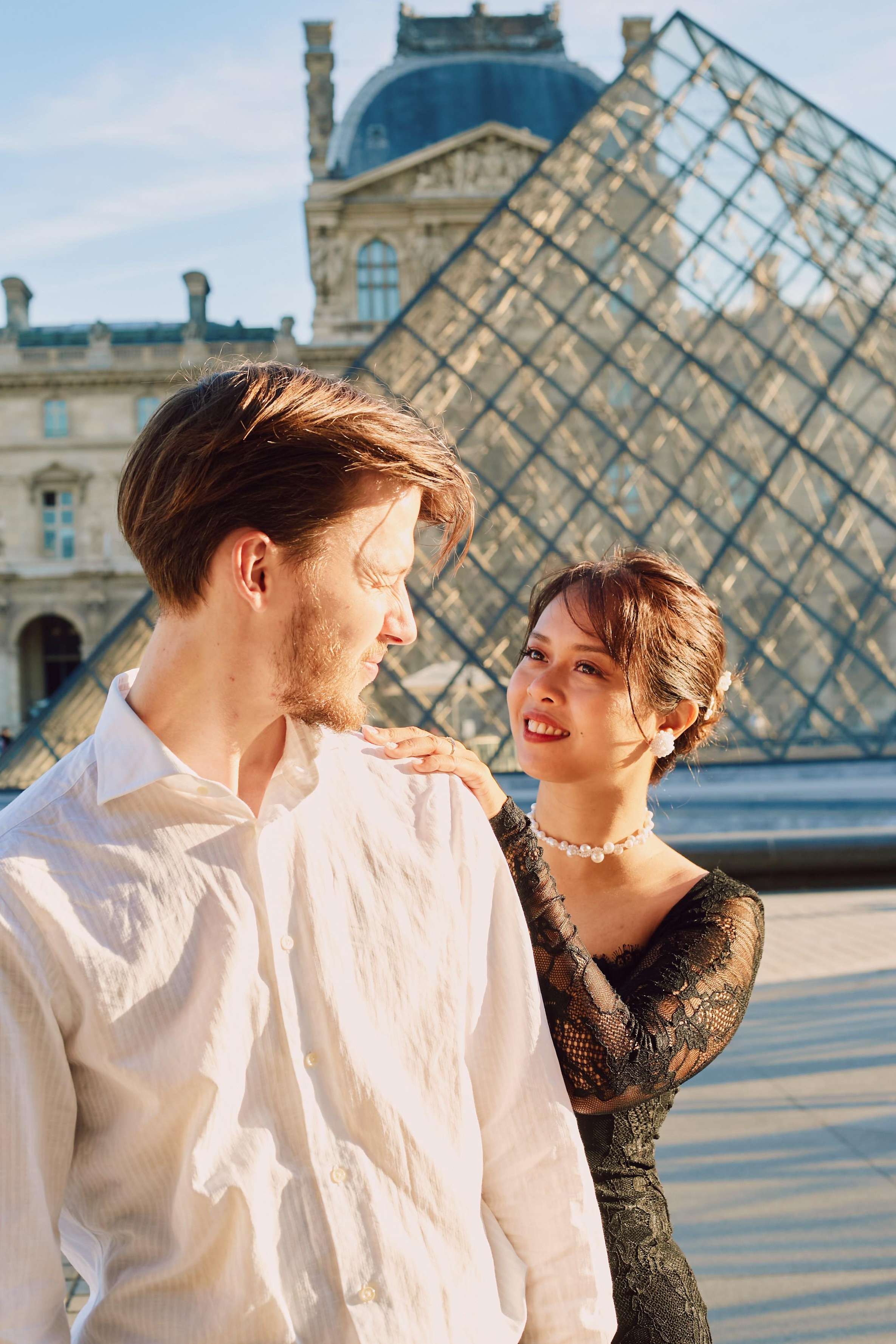
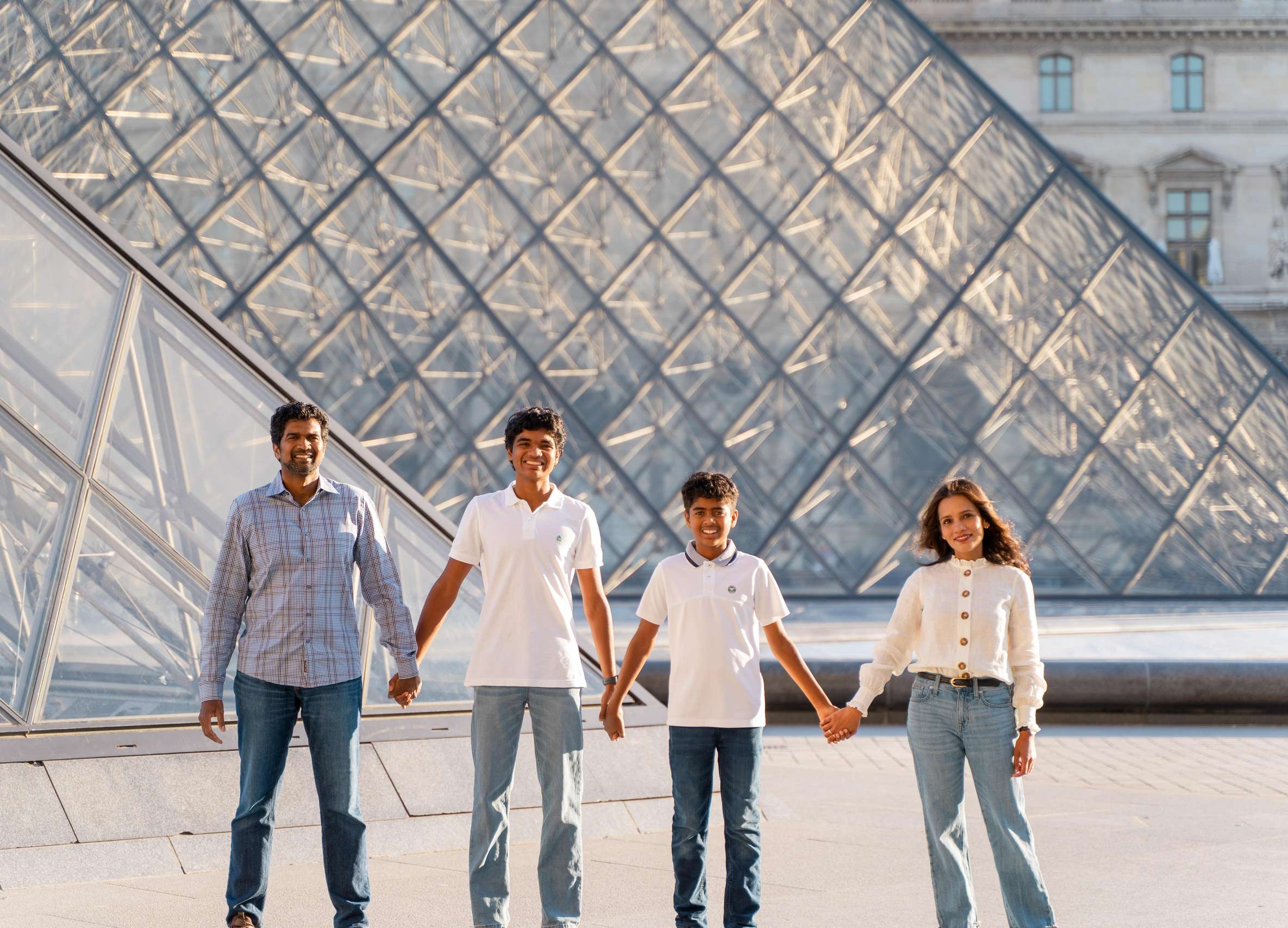
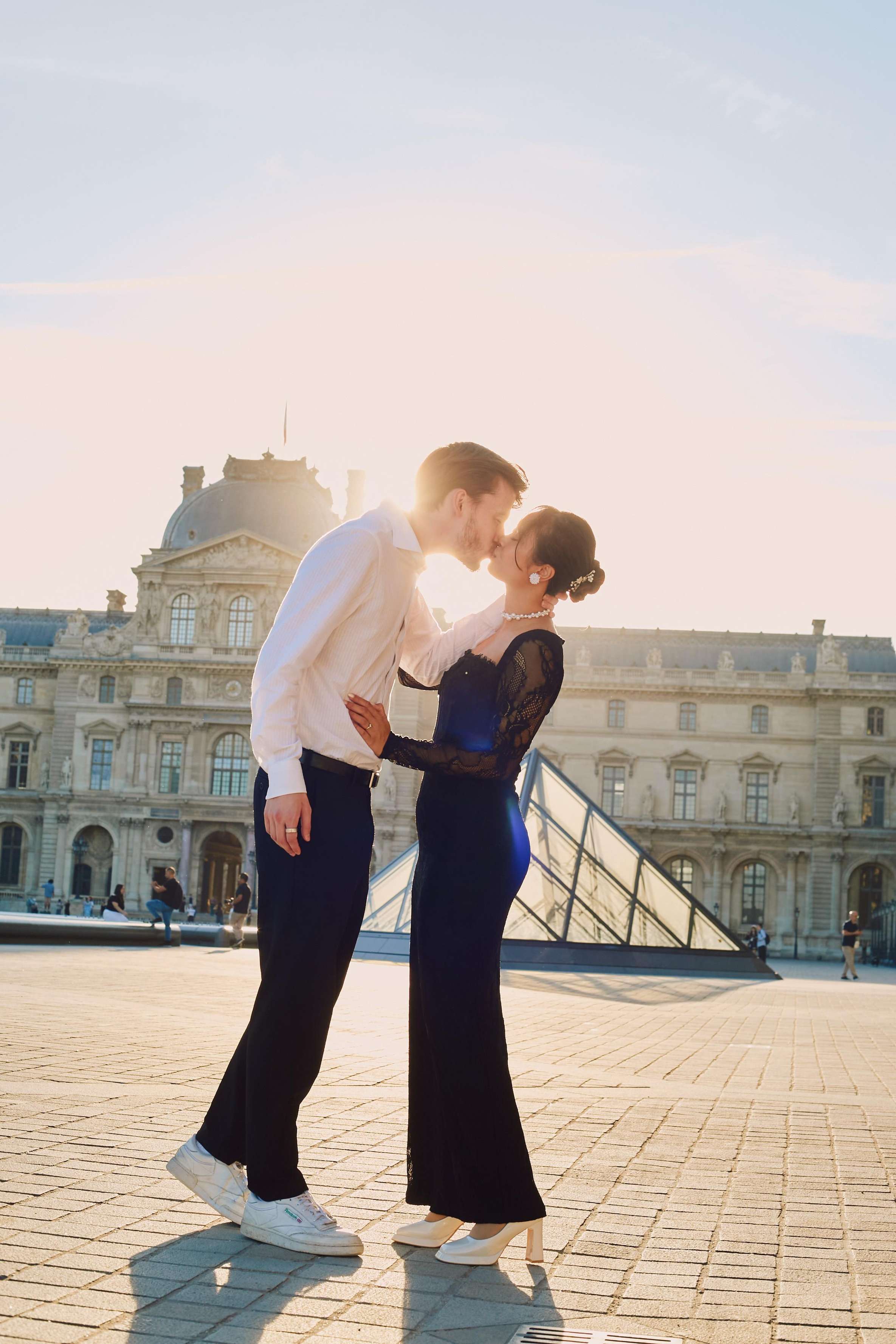
Picture the finished frame before you book. The pyramid stands in the middle of Cour Napoléon, with the palace façades rising around it, and its glass is the reason the shots work: transparent enough that the historic walls stay visible through it, faceted enough to catch the sky and throw it back.
Every photo reads as the Louvre, because the geometry is unmistakable.
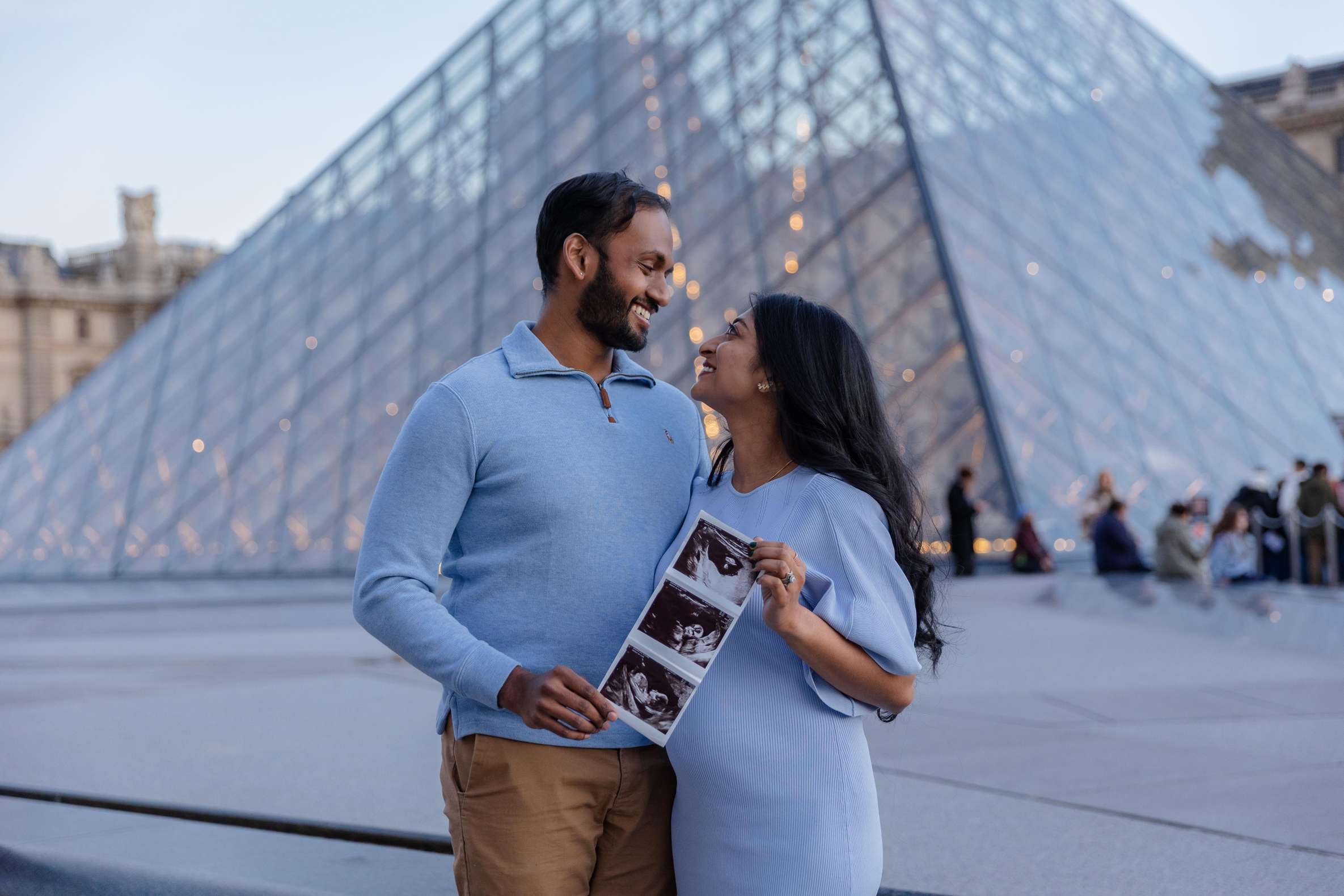
Daylight and dark give you two different locations. By day, the glass mirrors the sky and the stone around it. After dark, lights inside and out give the pyramid a soft glow that looks almost futuristic in portraits.
The courtyard stays open around the clock unless construction blocks it, so a night session is a real option. The 7:30 am figure counts the museum-side opening that photographers schedule the first sessions from; the public courtyard itself answers to no turnstile, which is why travelers have shot there long after closing hours.
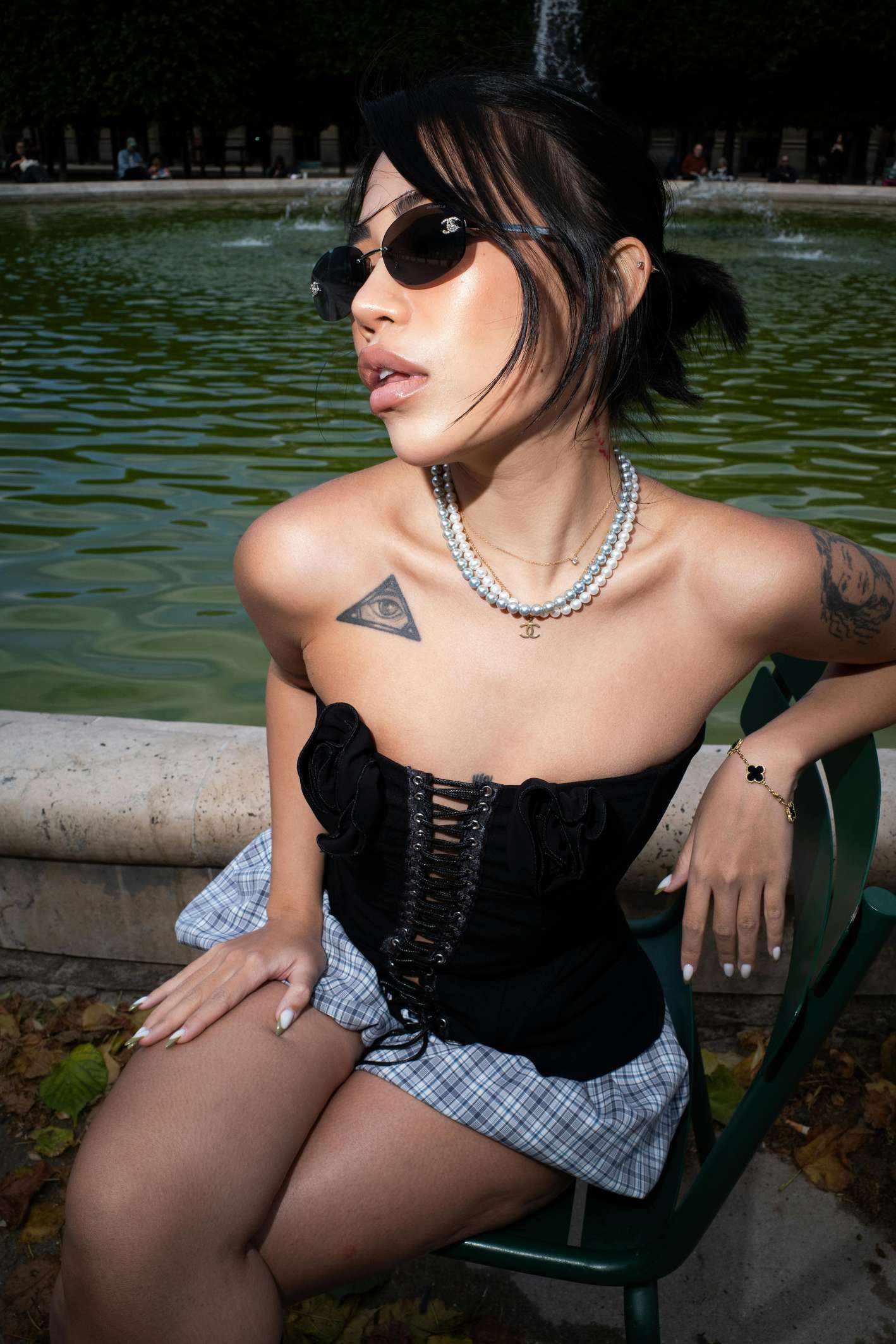
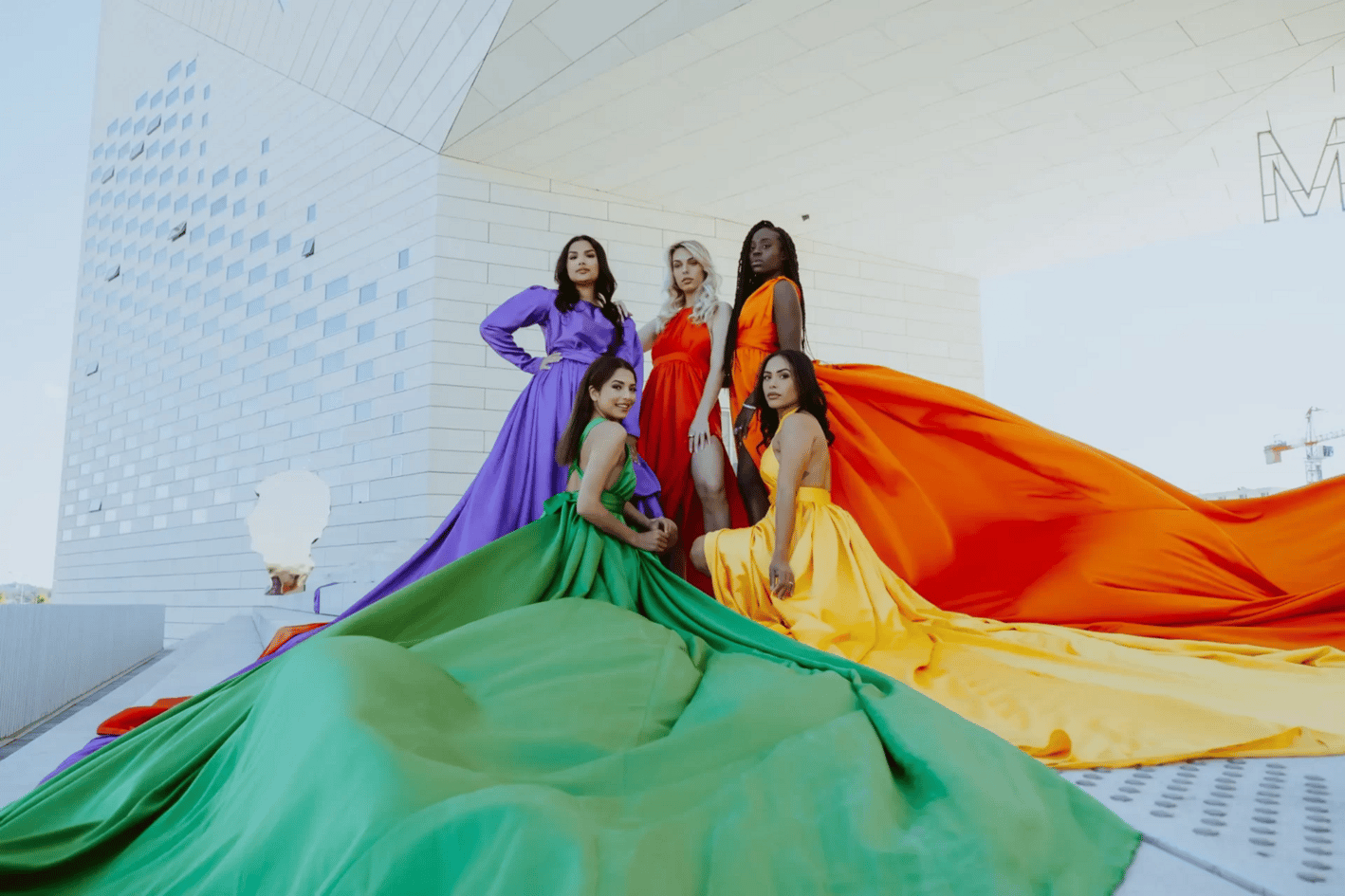
For a styled, editorial take on this look, a different courtyard works. The Paris: Fashion & Editorial Photoshoot runs a full hour in the elegant Cour Carré of the Louvre, with a photographer who specializes in fashion work guiding posing and artistic direction throughout.
It is the pick when the flat, classical stone appeals more than the pyramid itself.
Tour for this
Paris: Louvre & Palais Royal Photoshoot with a Photographer5.0★ (7) · 30 minutes - 1.5 hours · Free cancellation
The day has a shape here, and it pays to know it. Sunrise gives the softest, most directional light and usually the fewest people, but the Cour Napoléon opens at 7:30 am, so actual sunrise is off the table; the first stretch after opening is the quietest you will get.
Book the earliest slot your session offers and the courtyard is a different place.
Midday is the slot to avoid. Between 11 am and 3 pm the light turns hard and the square fills, which makes clean portraits a waiting game.
Sunset brings dramatic warm light on the pyramid, and people stay around for it. The calm stretch comes just after sunset, when the day visitors drift off and the artificial lights come up.
Louvre courtyard light and crowds
Sunrise Peak7:30 am to 9 am
Soft, directional light and usually fewer people; the courtyard opens at 7:30 am.
Midday11 am to 3 pm
Harder light and a packed courtyard make photos more difficult.
Sunset
Dramatic light, but people remain; the courtyard may ease after sunset.
QuietBusyThe busiest
None of this guarantees an empty square. Early sessions have helped visitors avoid the worst of it, and photographers regularly find good spots a little away from the main crowd, but the courtyard is never private.
Tour for this
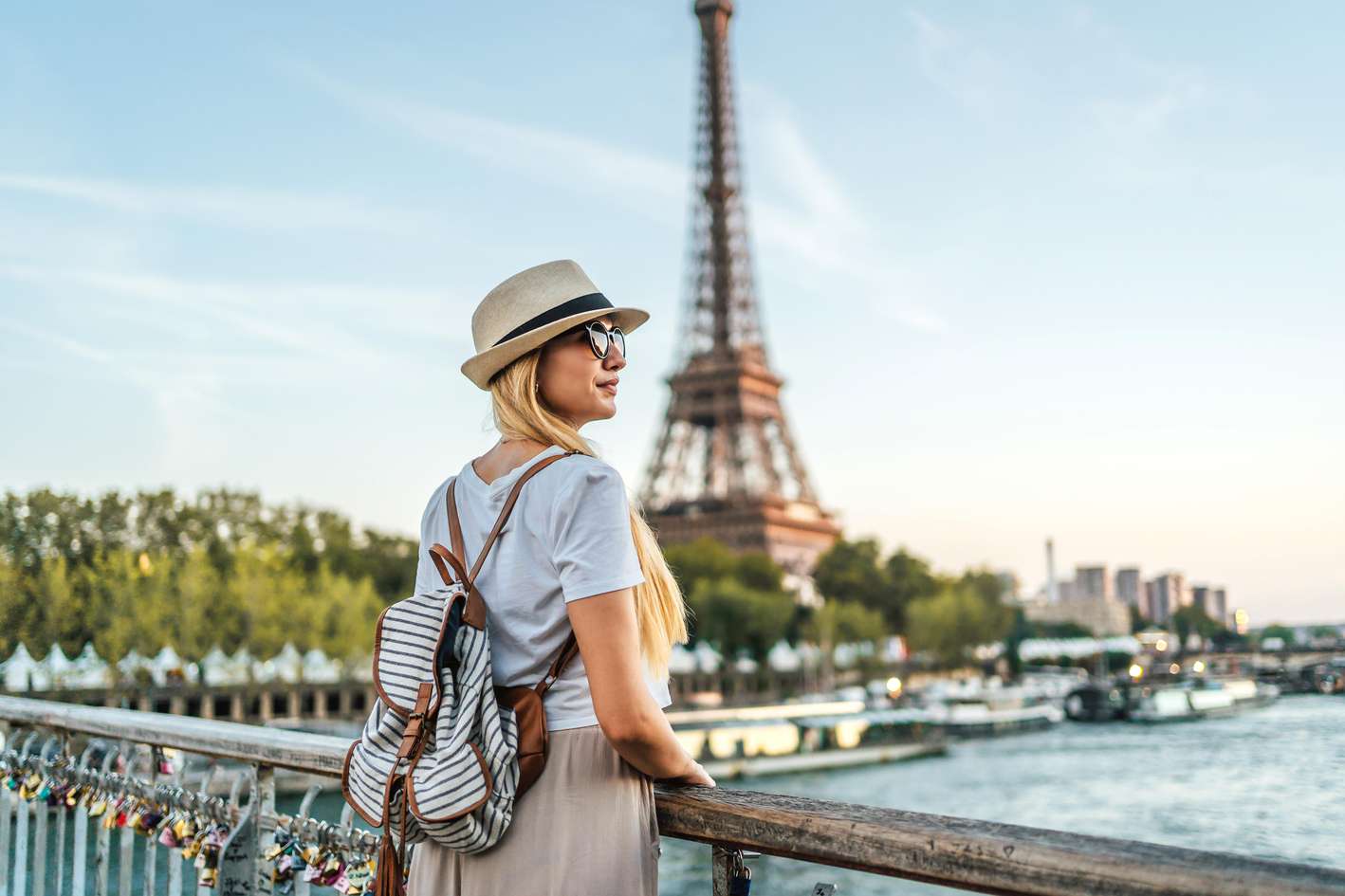
Paris: Eiffel Tower Street Photoshoot4.9★ (297) · 15 minutes - 1 day · Hotel pickup · Free cancellation
Your trip dates decide more than your outfit. Summer gives the longest window: June runs to about 16 hours of daylight with average highs near 24 to 25°C, so an early-morning shoot still starts in daylight and evenings stretch late.
Winter is the opposite, with roughly 8 to 9 hours of light in December and January and highs near 7 to 10°C, which compresses your usable hours into a short, cold block.
Rain is a year-round fact here, with about 10 to 13 wet days in every month, so no season is safe from it; pack for it regardless.
The demand figures tell you about booking calendars. These photoshoot tours are busiest in April, May and August, which tells you when photographers' calendars fill; the Louvre grounds themselves follow their own pattern. Book further ahead for those months.
Daylight, weather and tour demand by month
May is the busiest tour month, with 15.3 daylight hours, average highs of 19.5°C and 13.2 rainy days.
HighestApr to May
In betweenJun, Aug, Oct, Dec to Feb
LowestMar, Jul, Sep, Nov
Darker: a higher how busy it gets score, out of 5
Tap a month to read it.
June has near-ordinary tour demand, 16.1 daylight hours, average highs of 24.4°C and 12 rainy days.
HighestApr to Aug13.7 to 16.1 h
In betweenMar, Sep11.9 to 12.6 h
LowestOct to Feb8.3 to 10.8 h
Darker months: higher, from 8.3 to 16.1 h
Tap a month to read it.
May is the busiest tour month, with 15.3 daylight hours, average highs of 19.5°C and 13.2 rainy days.
HighestMar, May to Jun, Oct, Dec to Jan12 to 13.2 days
In betweenJul, Sep, Nov11.2 to 11.8 days
LowestFeb, Apr, Aug9.4 to 10 days
Darker months: higher, from 9.4 to 13.2 days
Tap a month to read it.
August is among the busiest tour months, with 14.3 daylight hours, average highs of 25.3°C and 9.8 rainy days.
HighestMay to Sep19.5 to 25.3 °C
In betweenApr, Oct15.6 to 17.7 °C
LowestNov to Mar7.2 to 13.1 °C
Darker months: higher, from 7.2 to 25.3 °C
Tap a month to read it.
The trade-off is simple: long summer evenings against a quieter, colder spring or autumn. Whichever you pick, the early-morning rule from the timing chapter still stands.
Which Louvre photoshoot session style fits your photos
Four styles sit on this page, and they differ more than their prices suggest. The express option shoots 15 minutes at the Louvre and delivers five edited pictures, enough for a polished souvenir.
The session outside the Louvre Museum runs from 15 minutes to 1.5 hours, with the longer packages climbing to 55 and 80 professionally edited, high-resolution images.
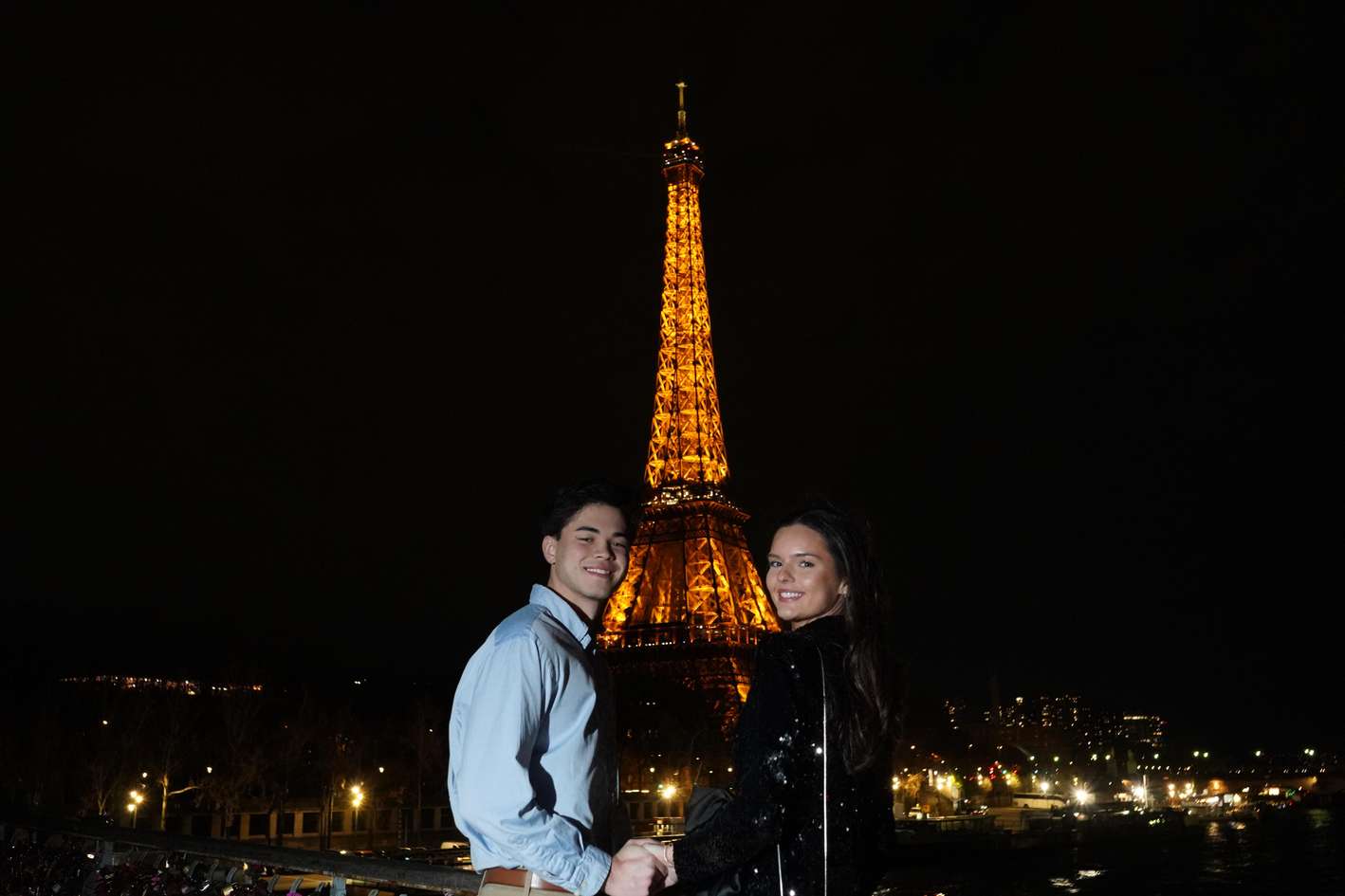
The Louvre and Palais Royal session adds a second setting: 30 minutes at the pyramid alone, or an hour and a half that walks over to the Palais Royal arcades and garden for a richer set. And for the broadest spread, the Eiffel Tower and Louvre session pairs both landmarks.
Ask to see full galleries, not highlight reels, and zoom in on edges before you commit; travelers who compare portfolios this way end up happier. Check the photographer handles candid moments as well as posed ones, and that the editing looks consistent across sessions.
Session styles at the Louvre
Express Louvre session
Louvre + Palais Royal
Eiffel Tower & Louvre
Length
15 to 30 minutes
30 minutes to 1.5 hours
30 minutes to 1.5 hours
Locations
Courtyard only
Louvre plus Palais Royal
Louvre plus Eiffel Tower
Edited photos
5 to 15
25 to 85
10 to 30 high-end edits
Delivery
within 24 hours in some cases
within 24 hours
under 48 hours
Express Louvre session
Length
15 to 30 minutes
Locations
Courtyard only
Edited photos
5 to 15
Delivery
within 24 hours in some cases
Louvre + Palais Royal
Length
30 minutes to 1.5 hours
Locations
Louvre plus Palais Royal
Edited photos
25 to 85
Delivery
within 24 hours
Eiffel Tower & Louvre
Length
30 minutes to 1.5 hours
Locations
Louvre plus Eiffel Tower
Edited photos
10 to 30 high-end edits
Delivery
under 48 hours
Who picks the images matters too: some photographers select and edit the photos themselves, and choosing your own from the gallery can cost extra. Know which system you are buying before the shoot.
The area around the Louvre makes multi-stop sessions easy on foot. Pair it with Notre-Dame, Sainte-Chapelle, the Conciergerie and Hôtel de Ville, then use the Seine quays and bridges for river views, and the whole mix stays walkable.
Each stop changes the look. The added buildings bring historic façades and civic architecture alongside the Louvre's stone. The river opens the frames up with water reflections and foreground details, and Notre-Dame supplies a Gothic contrast to the pyramid's clean lines.
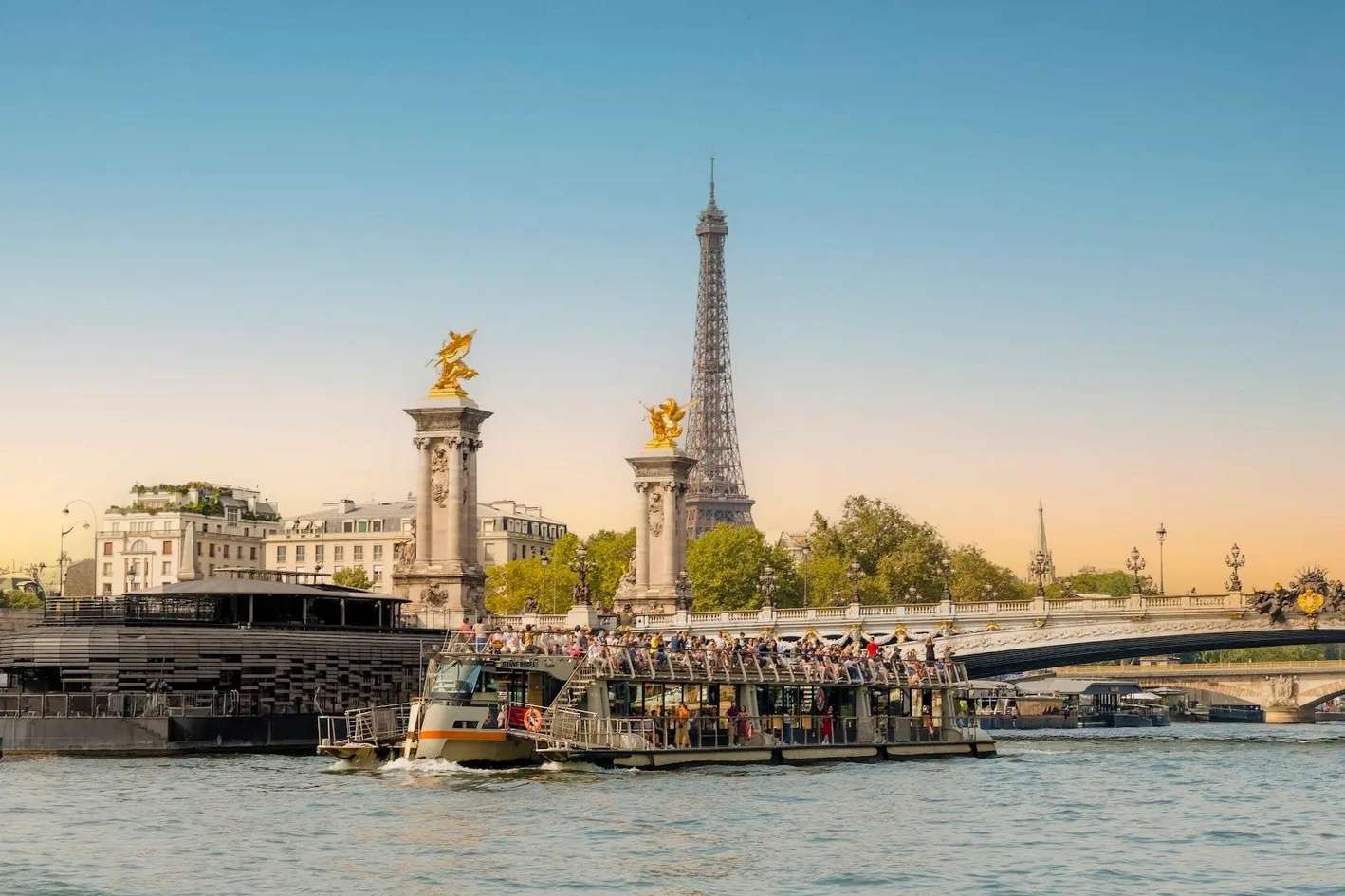
The Seine bridges earn a mention of their own. People who shoot here regularly use them as the nearby alternative for night photos, when the river catches the city's lights and the bridges frame them.
The practical way to think about it: every extra stop costs time from your booked session, and a 90-minute slot comfortably covers two settings while a 30-minute slot really wants one. Choose the combination before you choose the duration.
Two metro stations do the job. Palais-Royal / Musée du Louvre sits on lines 1 and 7, and Pyramides on line 14 is the other convenient stop; from either, the Cour Napoléon is a short walk.
From central Paris the trip stays easy. The Louvre is served directly by metro lines 1 and 7, and Châtelet is close enough that reaching the courtyard rarely takes more than a few stops.
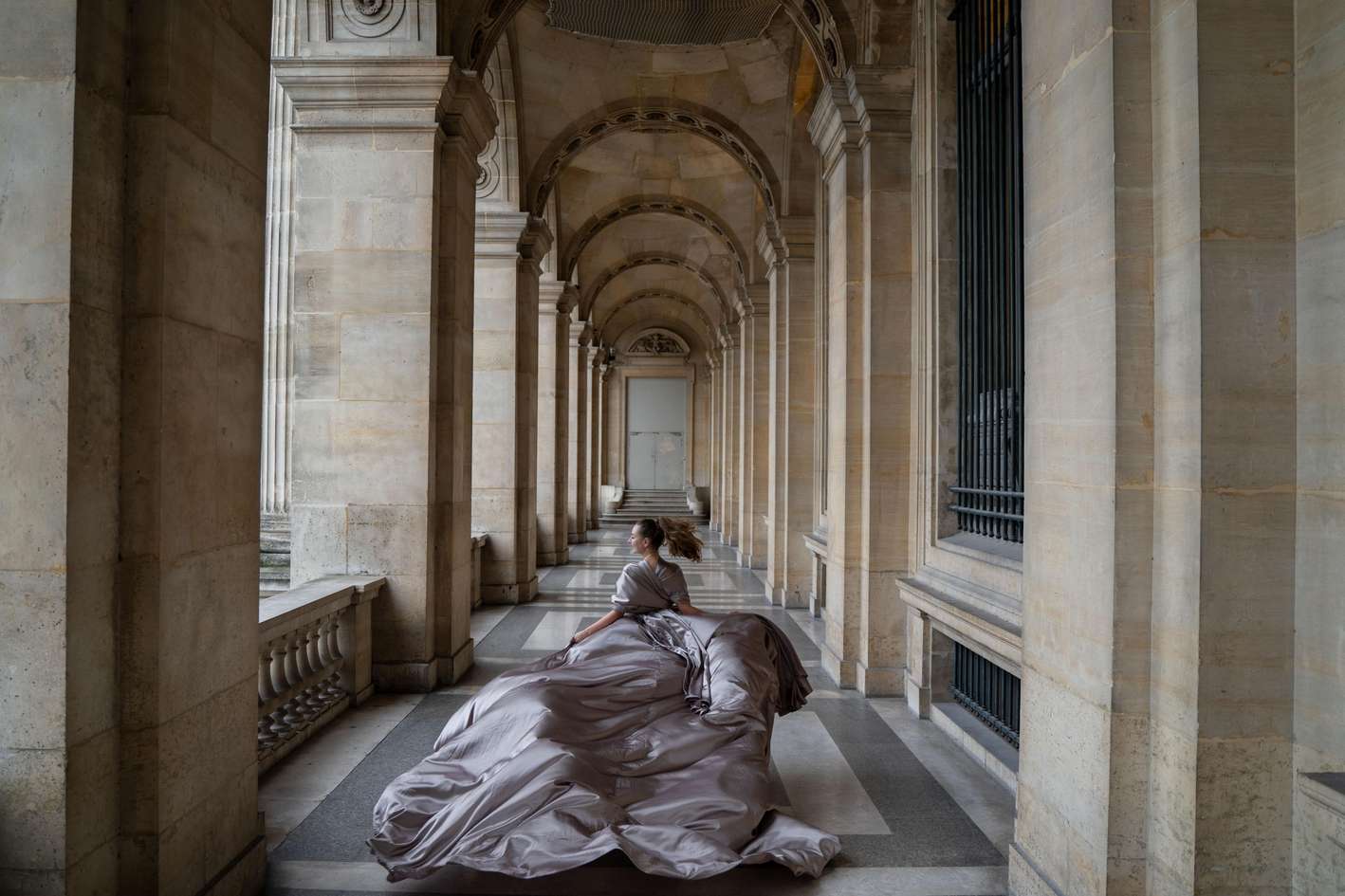
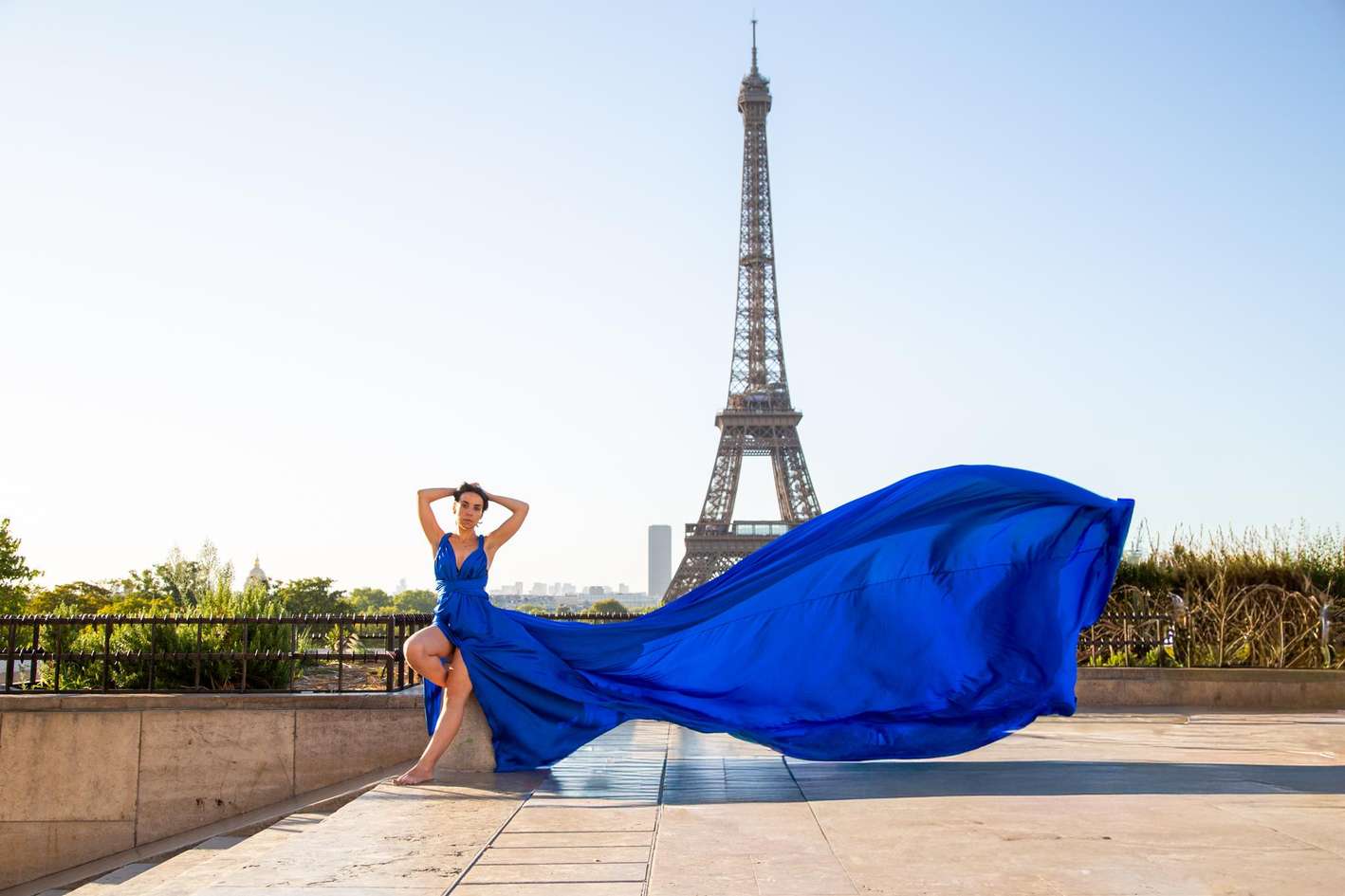
The real planning question is what you carry. A session with a flying dress or outfit changes means arriving dressed or packing the gown, and metro stairs turn that into a load.
Getting there with camera kit and a dress
Metro lines 1 and 7 to Palais-RoyalDirect lines from much of central Paris, then a short walk to the courtyard
Easy
Line 14 to PyramidesA modern, deep line; quick once you surface
Easy
Walking from central hotelsPleasant along the Rivoli arcades, but longer with a garment bag in hand
Moderate
Arrive early regardless. Sessions run to schedule because photographers often have bookings right after yours, so a late arrival eats your shooting time, not theirs.
Tour for this
Paris: Photo Shoot with a Private Travel Photographer4.9★ (210) · 30 minutes - 3 hours · Free cancellation
The dress starts its trip on the plane. Carry it in the cabin in a garment bag rather than checking it, lay the bag flat on top of your suitcase in the overhead bin, and hang it the moment you reach the hotel; many fabrics release light creases with gravity alone.
Jersey, crepe and stretch satin recover better than silk or stiff taffeta, and a travel steamer must work with 230-volt outlets, so pack the adapter too.
Under a flying dress, the base matters: pasties and nude shorts, no high-waisted shapewear, nude tights for warmth in the colder months. Wear trainers between spots and swap to heels only for posing, since the long dress hides your shoes in the frames anyway.
What to wear and bring for a Louvre photoshoot
Dec to FebAverage highs are about 7-10°C and lows about 2-4°C; wear a warm coat and layers.
Mar to May, Sep to NovConditions shift through these months; bring a light jacket or layers, especially for a cool morning.
Jun to AugAverage highs are about 24-25°C; choose light, breathable clothes.
Light rain layerRain occurs throughout the year, so a rain-ready layer helps with changeable weather.
Comfortable shoes with gripThe shoot may involve walking on uneven cobblestone and compacted gravel.
Pasties and nude shorts
Winter runs cool enough that a slim thermal layer under the gown is worth it, since the dress goes over your clothes. And a Paris photographer's trick worth stealing: carry a statement piece and change into it for the key frames rather than wearing it all day.
Tour for this
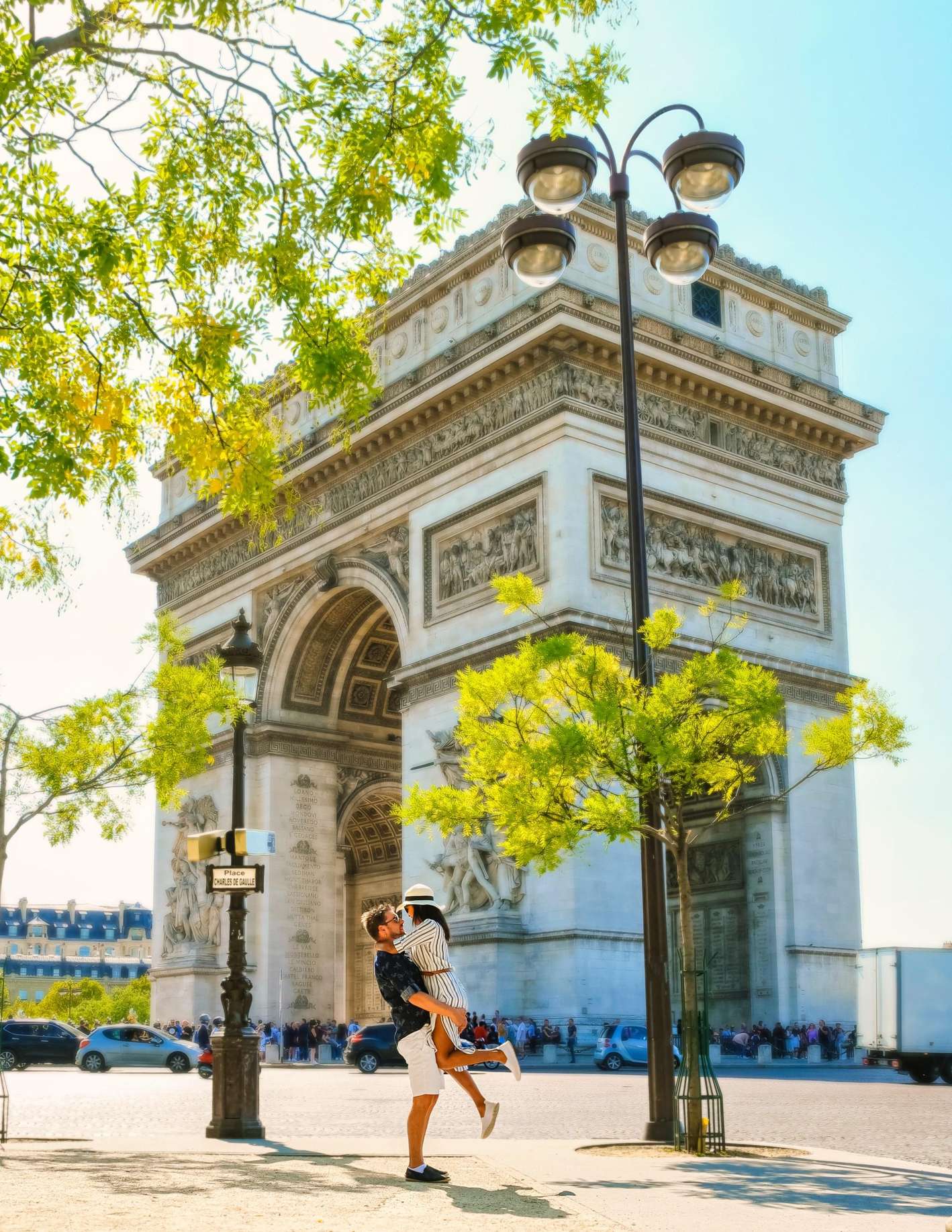
Paris: The Big Three Landmark Photoshoot4.8★ (145) · 1.5 - 2 hours · Free cancellation
Rain is the likelier problem, not wind. Winter months average around 10 to 13 rainy days against barely one windy day, so plan for the wet stuff. Light rain does not always stop a shoot, and photographers have adapted setups around gloomy skies before; heavy rain is what makes a session impractical.
Wind matters mainly for flying dresses. Sustained gusts above roughly 35 to 40 km/h make a long dress hard to control, and thunderstorms send everyone indoors, away from trees and waterways.
The protections are already in the booking. Free cancellation up to 24 hours ahead applies to your session, and one operator tries to reschedule hard-rain shoots, with a refund if the weather is too severe and no slot is possible during your stay.
When the day changes
If this happens
What happens then
Heavy rain falls
The operator tries to reschedule the session
Weather is too severe and no reschedule fits your stay
A refund follows
You cancel up to 24 hours ahead
Full refund
You arrive late
The session still ends on time, since photographers often book back-to-back
Decide your fallback before you need it: a wet-day alternative or a new date agreed with the photographer in advance beats deciding in the rain.
Dealing with anyone directly, the checks are quick. Anyone selling photo sessions in France must be registered, and there is no legal status that skips it. Ask for the company name or identification number; a registered professional gives it without hesitation, and you can look it up free on the government's public directory.
Get things in writing before paying. French law requires a written note showing the provider's name and address, the date and place, and the total. Pay by card or online booking, never cash, because cash leaves no trace and no recourse.
Watch for the street version of this trade: a price per photo on the spot, more photos sold as you go, and pressure to decide now. Real reviews live on independent platforms and name specifics, not just on the photographer's own site.
What to check before booking
Check
Why it matters
Our pick
Company registration
Only registered professionals give you contract, insurance and recourse
Confirmed on the platform, with free cancellation up to 24 hours ahead
Written total price
A fixed package agreed in advance, not a per-photo tally on the street
Package terms shown on the booking card before you pay
Real independent reviews
Specific, recent reviews on public platforms beat a curated site gallery
Hundreds of reviews with ratings visible on the listing
Usage rights
Photographers usually keep copyright, so personal usage rights must be confirmed
Confirm in writing before the session
Photographers usually coordinate the meeting point by WhatsApp beforehand, which is also a sign of an organized operation.
Sharing the courtyard - belongings and Louvre photoshoot manners
The courtyard is public, busy and full of pickpocketing opportunities in the crowd. Keep bags zipped and in front of you, keep your phone away when you are not shooting, and never leave belongings unattended while you pose. Your photographer cannot watch your bag and shoot at the same time.
Manners cost nothing and buy goodwill. Wait for a clear shot rather than expecting pedestrians to move, then step aside once yours is done so you are not blocking the flow. Other visitors will be taking photos outside the Louvre at the same time, so share the angles.
The same rules run in reverse: ask before taking a close-up of a stranger, a performer or a vendor, and accept a refusal without argument. If someone asks you to stop photographing them, stop.
Small courtesies keep the session pleasant, and they matter more in a packed square than on an empty street. A polite, quick shoot earns the photographer's patience and the passers-by's, and the photos show none of the friction either way.
Making a morning of it after your Louvre photoshoot
The session ends and the neighborhood takes over. The Palais Royal sits about 280 meters from the museum, with its courtyard, garden and Daniel Buren's striped columns close enough to reach in minutes; the Musée des Arts Décoratifs is nearly as close. You can turn the shoot into a half-day here without ever boarding transport.
If the museum itself is calling, budget honestly. The Louvre is large enough that a visit can run far beyond a few hours, so a full gallery visit wants its own day, not the tail end of a shoot morning.
One inside tip travels well: stand across from the Mona Lisa and look at The Wedding at Cana instead. Travelers recommend it as a worthwhile focus in its own right, and you get the famous painting in your peripheral vision while avoiding the crush at its rope.
Between the two, a coffee in the garden or a slow walk back through the arcades rounds off the morning. The photos arrive on your phone soon after, and the day already feels spent well.
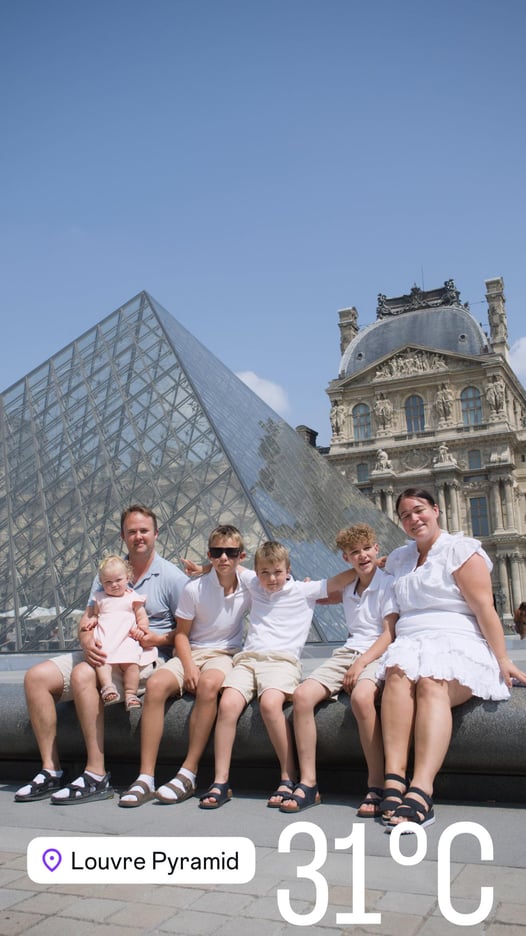
Booked a shoot with my four kids and Jaro was excellent. Got every photo combination we wanted, kept us together in crowds, shared local tips, and was patient with our tired 7-year-old. Highly recommend!
A Louvre photoshoot outside the museum is one of Paris's best-value portrait settings: the pyramid and façades are free, the light is best at opening, and the right photographer turns a public square into portraits that could come from nowhere else.
Book the earliest slot you can, confirm the photo count and delivery in writing, and the session looks after itself.
Go ifYou want recognisably Louvre portraits without paying for museum admissionYou can take an early session around the 7:30 am courtyard openingYou want two landmarks, such as the pyramid and the Eiffel Tower, in one session
Skip ifYou want an empty courtyard; the square is public and always sharedYour whole plan depends on midday light and no crowds
Short answers to what visitors ask before booking a session by the pyramid.
Paris2026
The pyramid glows after dark and the courtyard calms down. Come at 7:30 am with grippy shoes and let the photographer find the quiet angles.
Do I need to buy a museum ticket for a Louvre photoshoot?
No. The Cour Napoléon and the pyramid exterior are free to see, and the session options on this page shoot outside the palace. Gallery visits need admission, so leave that for a separate visit.
Can the courtyard be used for photos when the museum itself is closed?
Yes. Travelers use the Louvre Pyramid courtyard for photos even on closed days, and some couples shoot there on Tuesday evenings in areas left open. Expect it to stay busy either way.
What makes a Louvre photoshoot backdrop recognisable?
The glass pyramid against the grand palace gives portraits an unmistakable Paris setting. The courtyards and arcades add strong geometry and reflections, so the location shows clearly in the finished images.
Which outdoor spots around the Louvre can a session cover?
Photographers work the symmetrical pyramid-and-palace view in Cour Napoléon, the facade along Rue de Rivoli with its arcade as a leading line, and the view from Pont des Arts with the Seine below. The Tuileries Gardens sit right next door.
What time of day is best for a Louvre photoshoot?
Early morning gives the softest light and the fewest people, though the Cour Napoléon opens at 7:30 am. Between 11 am and 3 pm the light hardens and crowds peak. Just after sunset, the pyramid can catch warm light in a calmer courtyard.
How can I keep strangers out of my portraits?
Book an early session and ask your photographer to use quieter nearby spots such as the Tuileries. Early starts have helped visitors avoid crowds, and photographers know good angles a little away from the main crowd.
Can I pair the Louvre with other landmarks in one session?
Yes. Some sessions combine the Louvre with the Eiffel Tower or Palais Royal, and the surrounding area offers a walkable mix with Notre-Dame, Sainte-Chapelle and the Seine quays. Each added stop brings a new style of backdrop.
Which Metro station should I use?
Palais-Royal / Musée du Louvre on lines 1 or 7 puts you closest to the outdoor photo spots. Pyramides on line 14 is another handy option.
What should I wear and bring?
Wear layers and comfortable shoes with grip, and carry a light rain layer, since Paris averages about 9 to 13 wet days a month. Winter highs sit around 7 to 10°C and summer around 24 to 25°C, so dress for your month.
Do I need a permit for a professional shoot at the Louvre?
Professional photography at the Louvre requires prior written authorisation from the museum's leadership. Booked sessions handle this side, and if you plan something on your own, check the current rules with the museum first.